


My rule for storing flags: put them away clean, completely dry, and without pressure on the fabric. I aim for a dark indoor space at 65–70°F and 40%–50% relative humidity, with checks about every 6 months.
Here are the five mistakes I avoid - and what I recommend instead:
- Storing damp or dirty flags: Follow the care label, and dry seams and hems fully before packing.
- Folding too tightly: Cushion loose folds with acid-free tissue, or use supported rolling when the fabric allows it.
- Using unsuitable containers: Choose a roomy archival box, suitable tube, or clean muslin cover - not ordinary cardboard or sealed plastic bags.
- Exposing flags to heat, dampness, or light: Use an interior closet or cabinet, away from windows, pipes, and heating vents.
- Skipping inspections: Check the flag and its packaging for moisture, pests, stains, and compression. Label the container and keep dated notes.
For fragile, historic, painted, or damaged flags, I recommend a textile conservator before cleaning or changing storage. <u>A storage box cannot fix damp fabric or a damp room.</u>
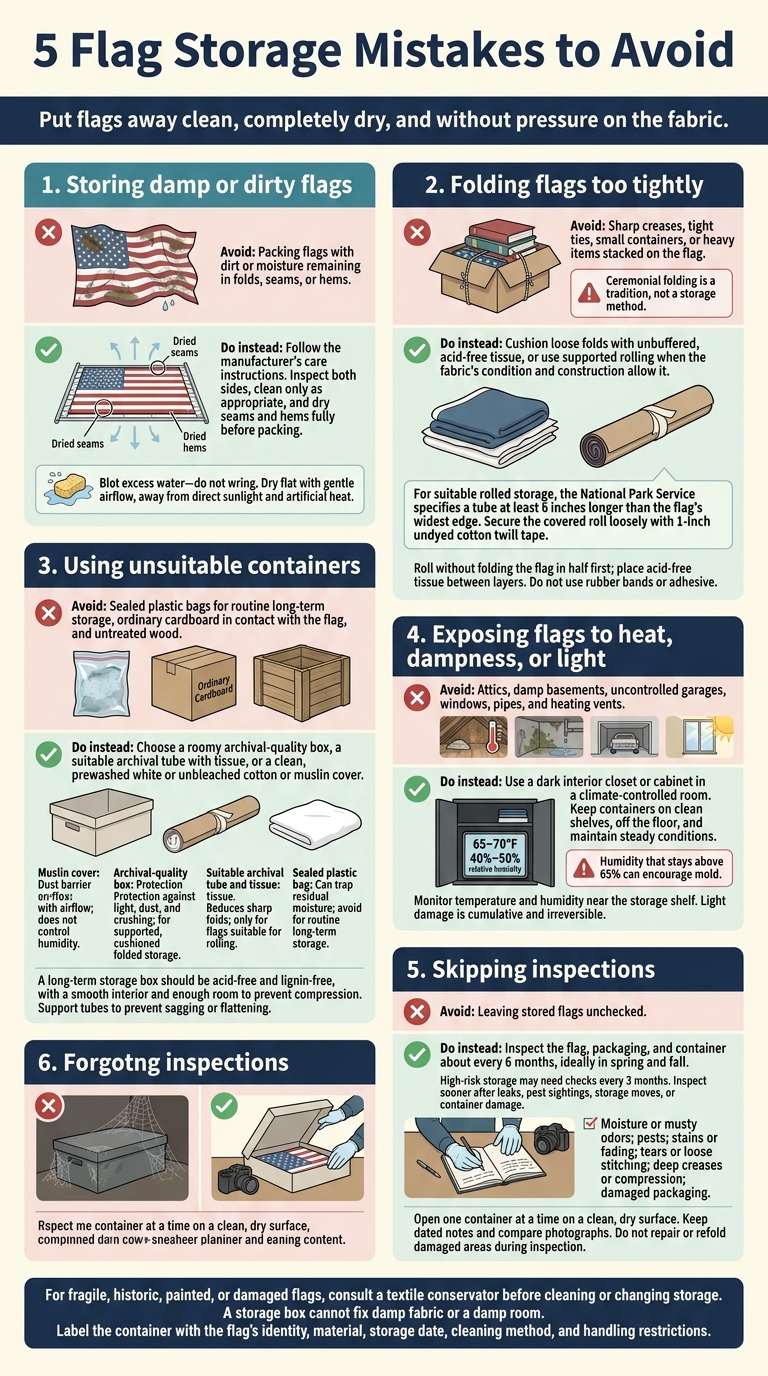
5 Flag Storage Mistakes to Avoid
Mistake 1: Storing Damp or Dirty Flags
Dirt, sweat, salt, and food residue can stain a flag and weaken its fibers. Add trapped moisture, warmth, and poor ventilation, and mold can develop. Even if the surface feels dry, moisture may remain in folds, seams, and hems.
Inspect, Clean, and Dry Before Storage
Before storing your flag, lay it in bright light and inspect both sides. Check for stains, insects, mildew, loose stitching, tears, frayed edges, and weak grommets or ties. Pay close attention to spots that rub against the pole or halyard. Photograph any damage so you can spot new problems during later inspections.
Follow the manufacturer’s care instructions. Many durable outdoor flags can be hand-washed with lukewarm water and mild soap, then rinsed thoroughly. Avoid bleach, harsh stain removers, and aggressive scrubbing. Before cleaning historic, fragile, hand-painted, embroidered, or structurally weak flags, consult a textile conservator.
Blot excess water with clean towels - don’t wring the fabric. Lay the flag flat on a clean, dry surface with gentle airflow. Support its weight to protect wet seams, and keep it away from direct sunlight and artificial heat. After rain or washing, wait until every part feels fully dry before packing it away.
If you notice mildew or a musty odor that won’t go away, separate the flag from clean textiles and avoid shaking it. Don’t apply fragrance or household mildew products, or seal damp fabric in airtight storage. Seek conservation advice. If mildew is present, address the moisture source before storing the flag again.
sbb-itb-4fbc981
Mistake 2: Folding Flags Too Tightly
Even a clean, dry flag can suffer damage when folded too tightly. Tight folds weaken fibers and strain seams and stitching. Fold as loosely as possible. Never squeeze a flag into a small container or stack heavy items on top.
Cushion Folds or Roll When Suitable
Use a clean, spacious surface that supports the whole flag, and have two people handle large flags. Remove jewelry that might snag the fabric. If the flag is fragile, heavily stitched, painted, or embellished, follow a textile conservator’s guidance.
Ceremonial folding is a tradition, not a storage method.
If a sturdy flag must be folded, cushion each fold with unbuffered, acid-free tissue. Aim for rounded bends rather than sharp creases. Skip newspaper, colored tissue, and tight ties that press into the fabric.
If the flag is stable enough to roll, roll it onto an archival-quality support tube without folding it in half first.
The National Park Service specifies a tube at least 6 inches longer than the flag’s widest edge.
Place acid-free tissue between the layers, smooth the fabric as you roll, and keep the tension light and even. Cover the finished roll with protective tissue, then secure it loosely with 1-inch undyed cotton twill tape - not rubber bands or adhesive. Whether folded or rolled, the flag needs a container that supports it without compression.
Mistake 3: Using Unsuitable Storage Containers
Once your flag is clean and folded or rolled, its container should protect it without putting pressure on the fabric.
Sealed plastic bags can trap moisture. Ordinary cardboard, acidic paper products, and rough surfaces can stain, weaken, or snag the fabric. Avoid airtight bags for routine long-term storage, and don't let flags touch untreated wood or ordinary cardboard.
Choose Suitable Covers, Boxes, and Tubes
Choose a container based on the flag's material and condition - not just its size. Each storage option protects against different risks.
| Storage choice | Main risk or benefit | Best use |
|---|---|---|
| Sealed plastic bag | Can trap residual moisture | Avoid for routine long-term storage |
| Clean cotton or muslin cover | Keeps dust off and allows airflow; does not control humidity | Routine storage in a suitable indoor location |
| Archival-quality box | Protects against light, dust, and crushing | Supported, cushioned folded storage |
| Suitable archival tube and tissue | Reduces sharp folds when rolling is appropriate | Flags whose condition and construction allow rolling |
For routine storage, choose a clean, prewashed cotton or muslin cover that's white or unbleached. Treat it as a dust barrier only - it won't control humidity. Use cardboard only as a short-term fix. Line it with buffered acid-free tissue or Tyvek, and wrap the flag in clean muslin before placing it inside.
For longer-term preservation, choose an acid-free, lignin-free box with a smooth interior and enough space to place the flag without compressing it. The label “Acid-free” doesn't tell you everything: check for exposed adhesives or coatings that could touch the fabric. Keep grommets, fringe, and embroidery away from hard edges. If you're storing the flag on a tube, support the tube so the roll doesn't sag or flatten unevenly.
Mistake 4: Storing Flags in Heat, Dampness, or Light
Attics, damp basements, and garages without climate control expose flags to heat, condensation, leaks, and seasonal changes. Light damage adds up and cannot be reversed. Sunlight and indoor lighting can fade dyes and weaken fibers - even while a flag is in storage.
Choose a Cool, Dry, Dark Indoor Location
Store flags in an interior closet or cabinet in a climate-controlled room. Keep them away from windows, plumbing, heating vents, and exterior walls that collect condensation. Smithsonian guidance recommends approximately 65–70°F and 40%–50% relative humidity for household textile storage. Keep conditions steady, too: avoid sharp daily or seasonal changes.
Put a digital temperature-and-humidity monitor near the storage shelf. Check readings as seasons change rather than assuming the room stays dry. Humidity that stays above 65% can encourage mold. If readings remain high, move the flag to a room with steadier conditions or improve humidity control. Use light briefly for inspections, then return the flag to darkness.
Keep containers on clean shelves, off the floor and away from leaks, pests, paints, fuels, oils, and cleaning products. Allow enough space so flags don’t get crushed. Businesses should set aside a labeled indoor shelf for flags, separate from flagpoles, brackets, tools, and other equipment that could snag or stain the fabric.
Historic, hand-painted, or fragile flags may need professionally monitored storage and special support. Consult a textile conservator before choosing storage conditions or treating mold, smoke damage, or weakened fabric. Household treatments can cause permanent damage.
Mistake 5: Skipping Storage Inspections
Even the best storage setup needs routine checks. Flags can develop hidden damage over time, so inspect the flag, packaging, and container for moisture, pests, and compression.
Check Stored Flags About Every 6 Months
Check stored flags every six months, ideally in spring and fall. Inspect sooner after leaks, pest sightings, storage moves, or container damage. High-risk storage may need checks every three months, with extra attention in spring and fall.
At each check, confirm that the flag and packaging still look stable. Open one container at a time on a clean, dry surface, and finish inspecting it before moving to the next. Look for musty odors, condensation, mildew, stains, fading, holes, loose stitching, tears, fiber loss, and rust. Check for signs of insects, including webbing, cocoons, shed skins, or frass. Examine folds for deep creases or compression, and check packaging for dampness or damage.
Record the date, storage location, condition, and any action taken. Compare photos to spot gradual changes. Replace damaged packing with suitable, clean materials, and keep affected flags separate. Do not repair or refold damaged areas during inspection.
Conclusion: Flag Storage Checklist
Use this quick checklist before storing any flag, and keep it with the storage container.
- Check the flag. Make sure it’s clean and completely dry. Note its fabric, construction, embellishments, and age.
- Choose storage that fits its condition. Use acid-free tissue, washed muslin, and a properly sized archival box or tube.
- Pick a cool, dry, dark interior space. Keep conditions stable, aiming for about 65–70°F and 40%–50% relative humidity.
- Get expert help when needed. Refer fragile, historic, or severely damaged flags to a textile conservator.
- Label the container before closing it. Include the flag’s identity, material, storage date, cleaning method, and handling restrictions so it can be retrieved and handled safely.
FAQs
Can I store different flags together?
Yes, as long as you protect the fabric. Place acid-free tissue paper between each layer to keep flags from touching and prevent possible color transfer. In humid conditions, you can use unbleached cotton as a moisture barrier between flags.
Before storing flags, make sure they’re clean and completely dry to prevent mold or mildew. Check them regularly for damage or pests.
Does flag material affect how I should store it?
Yes. Cotton or cotton-blend flags need several hours to air-dry completely in a well-ventilated area before storage. Trapped moisture can cause long-term damage.
Roll flags with embroidery or metallic details instead of folding them. This avoids pressure points that can damage the decorations and fabric.
Nylon and polyester flags are durable, but they still need careful handling and climate-controlled storage to prevent fading and material deterioration.
Is a memorial display case safe for long-term storage?
Yes - the right case and placement help protect the fabric. Choose a high-quality case made from acid-free materials, with UV-protective glass or acrylic to help prevent fading.
Place it in a climate-controlled room, away from direct sunlight, extreme temperatures, and high humidity. Avoid attics, basements, and garages, where changing conditions can damage the fabric or lead to mildew.

