


Maintaining a flagpole is cheaper and safer than replacing it - until it isn’t. Regular inspections, cleaning, and small repairs can extend the life of your flagpole for years, costing as little as $200 annually. But when structural damage, aging, or costly repairs pile up, replacing the flagpole might save you more in the long run. Here’s what you need to know:
- Maintenance Costs: Routine care, like replacing ropes or snap hooks, is affordable and prevents bigger problems.
- Replacement Costs: A new flagpole, including installation, ranges from $250 to $1,000+ depending on size and material.
- When to Replace: Severe rust, bending, or repair costs exceeding 50% of replacement expenses signal it’s time for a new pole.
Quick Tip: Regular inspections every three months and seasonal maintenance can catch problems early, saving you from unexpected expenses or safety hazards. If repairs are frequent or costly, consider upgrading to a sturdier, modern flagpole.
When to Choose Maintenance
Most flagpole issues don’t call for a complete replacement. Regular maintenance can address most problems at a much lower cost, especially when caught early. Whether for residential or commercial flagpoles, routine care helps prevent minor wear from escalating into major structural damage.
Regular Inspections and Small Repairs
Scheduling inspections every three months can help you catch and fix small issues before they turn into expensive repairs. During these quarterly checks, look out for frayed ropes, worn snap hooks, and loose hardware.
"If the rope breaks, there is no way to replace it from the ground. We would have to get to the top of your flagpole which can be about 3-4 times the cost for the service than if we just did it from the ground." - Maddi Coleman, Custom Flag Company
Snap hooks, for example, can wear down over time due to friction with brass grommets. Replacing them is simple and inexpensive, especially compared to the risk of losing your flag in strong winds. Similarly, tightening screws, clips, and finials can help prevent structural strain on the flagpole.
Seasonal Care and Prevention
Each season brings its own set of maintenance challenges for flagpoles:
- Spring: Check for winter damage like cracks or corrosion, tighten all hardware, and clean off any salt or grime buildup.
- Summer: Apply a protective wax to aluminum poles to guard against UV damage and heat-related oxidation.
- Fall: Replace worn ropes before freezing temperatures make them brittle, and inspect anchor points for rust.
- Winter: Remove flags during heavy snow or ice storms to reduce stress on the pole. Avoid using chemical de-icers near the base, as they can corrode metal.
Additionally, lubricate pulleys and revolving trucks every few months to ensure smooth operation. If you hear squeaking or notice resistance when raising the flag, a quick application of lubricant can usually solve the problem. These small preventive steps can save you from costly repairs down the road.
What Maintenance Costs
Routine maintenance not only keeps your flagpole safe but also postpones the need for expensive replacements. On average, annual upkeep costs less than $200 for most flagpoles. This typically covers cleaning supplies, replacement ropes, snap hooks, and basic hardware. In contrast, replacing a flagpole can range from $250 to over $1,000, depending on its height and material. Professional servicing for intact parts is also far cheaper than emergency repairs.
"Routine inspections and timely part replacement can prevent costly repairs and unexpected downtime." - The Flagpole Store
Affordable items like snap hooks and clips are easy to replace, making regular care a smart investment. Beyond cost savings, routine cleaning helps maintain the flagpole’s appearance while preventing corrosion that could lead to bigger problems.
sbb-itb-4fbc981
When to Replace Your Flagpole
Sometimes, repairs just aren’t enough to keep your flagpole in good shape. Knowing when it’s time to replace it can save you both money and frustration in the long run.
Structural Damage Warning Signs
Certain types of damage are clear indicators that your flagpole is beyond repair. Look out for deep rust and pitting, especially at the base or joints, as well as visible cracks, bending, or warping. These issues suggest that the metal is no longer strong enough to safely support the pole.
"Neglecting these concerns [rust, dents, or corrosion] may result in additional decay and jeopardize the pole's structural stability." - American Flagpole Company
If your flagpole is leaning or wobbling, it’s unsafe and should be secured immediately. This kind of instability often points to deeper problems, like cracks in the foundation or erosion around the base - issues that typically call for a full replacement rather than a quick fix. For telescoping poles, difficulty extending or retracting sections, even after cleaning, often indicates internal damage.
Beyond structural problems, the age and design of your flagpole can also make replacement necessary.
Old or Inefficient Flagpoles
Older flagpoles, especially those with external halyard systems, come with their own set of problems. The ropes in these systems are prone to rot from UV exposure and salt air and are easy targets for vandalism. Modern internal halyard systems offer better protection by keeping the rope inside the pole, which improves both durability and security.
Another concern with older poles is that they may not meet current wind velocity ratings for their height and location. This makes them more likely to fail during extreme weather. If your pole bends or struggles to handle local wind conditions, it’s a sign that it’s not suited for your environment and should be replaced with a sturdier model.
When these physical issues start piling up, and repair costs keep rising, replacement often becomes the best option.
When Repair Costs Are Too High
At some point, the cost of repairs can creep uncomfortably close to the price of a new pole. Minor fixes like replacing a finial might only cost $50 to $100, but more extensive repairs - those involving significant materials or labor - can range from $150 to $500. If repair estimates approach or exceed the cost of a new flagpole, replacement is the smarter financial move.
Specialized repairs can get especially pricey. For example, replacing a rope that’s hard to reach might cost three to four times the usual rate because it requires a bucket truck or climbing gear. If you’re facing multiple expensive fixes on an aging pole, it often makes more sense to invest in a new, more reliable one rather than continuing to patch up the old one.
Comparing Costs: Maintenance vs Replacement
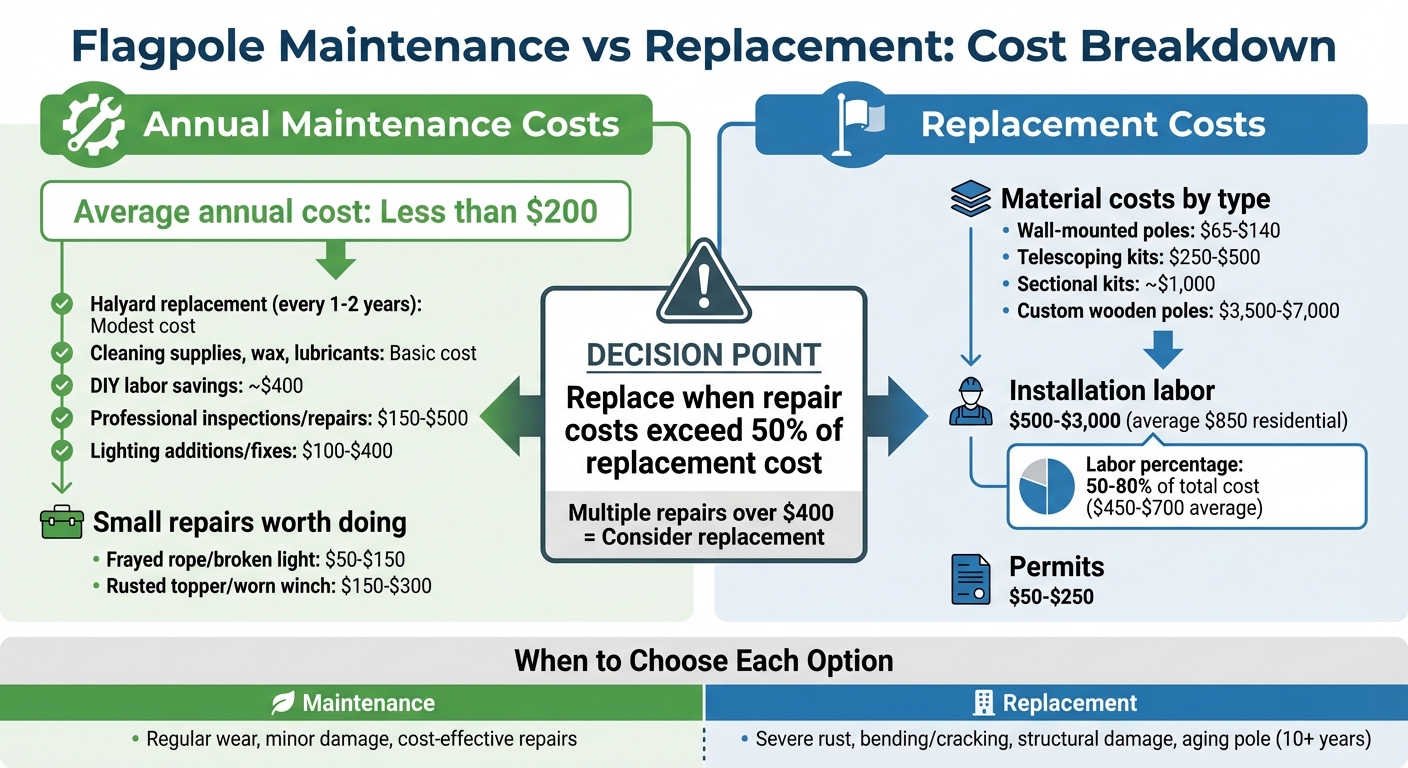
Flagpole Maintenance vs Replacement Cost Comparison Guide
Breaking down the costs of flagpole care can help you decide whether maintenance or replacement is the better option. Here's a closer look at the numbers to simplify your decision-making process.
What Maintenance Costs
Regular maintenance involves recurring expenses that keep your flagpole in working order. For example, replacing the halyard every 1–2 years is crucial to prevent rope breakage and costs a modest amount. Other routine expenses include cleaning supplies, metal-safe wax, and lubricants for pulleys and winches. If you handle these tasks yourself, you could save around $400 in labor costs.
However, professional services like inspections and repairs can range from $150 to $500, depending on the job, such as replacing pulleys or halyards. If you need to add or fix lighting, expect to pay between $100 and $400 for basic installations. These costs are manageable, but they can add up over time.
What Replacement Costs
Replacing a flagpole involves both material and installation expenses. Material costs vary widely based on the type of pole. Wall-mounted poles start at $65 to $140, telescoping kits range from $250 to $500, sectional kits cost about $1,000, and custom wooden poles can run anywhere from $3,500 to $7,000.
Installation labor is another significant expense, usually adding $500 to $3,000 to the total. For most residential installations, the average cost is about $850. Labor often makes up 50% to 80% of the total project cost, averaging $450 to $700 for standard jobs. Additionally, permits may be required, which can cost an extra $50 to $250. When maintenance expenses begin to climb, replacing the pole might be the more cost-effective option in the long run.
When Maintenance Costs Add Up
Maintenance is typically the more affordable route until repair costs start nearing replacement figures. Fixing smaller issues, like a frayed rope or broken light ($50–$150), is usually worth it. Even replacing a rusted topper or worn-out winch ($150–$300) makes financial sense.
However, when multiple problems arise on an aging pole - especially if repairs require specialized tools or equipment - the total can quickly exceed $400. At that point, replacing the pole may be a smarter and more economical choice. By weighing these costs alongside safety and repair considerations, you can make an informed decision about your flagpole care strategy.
Maintenance Tasks That Extend Flagpole Life
Taking care of your flagpole isn’t just about keeping it looking good - it’s about making sure it lasts. Regular maintenance can help you avoid costly repairs and keep your flagpole standing strong for years. A little effort goes a long way to ensure durability.
Monthly Rope and Hardware Inspections
Every month, check the halyard (the rope that raises and lowers your flag) for signs of wear. Replace it yearly to protect against damage from UV rays and rain. For residential flagpoles, a 1/4-inch diameter rope works well, but commercial poles taller than 30 feet need something sturdier, like a 5/16-inch or 3/8-inch rope. If you notice minor wear, simply adjust the flag snaps by 8–10 inches to spread out the stress.
"For optimum performance, the rope (also known as halyard in the flag business) should be inspected every few months for wear." - AffordableFlagPoles
After winter, take a closer look at snap hooks, clips, and carabiners to make sure they haven’t weakened. Don’t forget to examine the foundation and nearby concrete for cracks that might compromise stability during strong winds. Pairing these inspections with regular cleaning helps shield your flagpole from environmental wear and tear.
Cleaning and Rust Prevention
Seasonal cleaning is key. Use mild soap and water to wash away grime, salt, and pollen that can corrode the surface. A soft cloth or a garden hose on low pressure gets the job done - skip abrasive cleaners, as they can scratch protective coatings. For steel poles, address rust spots by lightly sanding them and applying a rust-inhibiting paint. Adding a protective coating in the fall is a smart way to guard against weather-related damage.
Professional Servicing
Twice a year, it’s worth having a professional inspect your flagpole. They can catch early signs of wear, corrosion, or structural issues. Professionals are equipped to handle tasks like replacing worn pulleys, servicing winches, and addressing foundation problems safely. Lightly lubricating moving parts - such as winches, pulleys, and telescoping mechanisms - keeps everything running smoothly and prevents binding. Investing in professional maintenance not only ensures safety but also helps you save on repairs in the long run.
How to Decide Between Maintenance and Replacement
What to Consider
Start by inspecting your flagpole for signs of damage like bending, cracking, or severe rust - especially on the toppers. These issues can pose serious safety risks. If the pole is leaning or feels unstable, it might indicate a failing foundation.
Next, weigh the costs of repairs against the price of a new flagpole. For example, if the halyard snaps, professionals with specialized equipment will likely be needed to fix it. A good rule of thumb: if repair costs exceed 50% of the cost of a replacement, it’s often more practical to invest in a new flagpole.
"If the rope completely breaks, it can be costly to have it replaced because we have to get to the top of the pole... if you see that rope is becoming thin or worn before the rope breaks, the flagpole can be re-roped from the ground which is much more cost effective."
– Custom Flag Company
Aging hardware is another factor to consider. Components like trucks (pulleys) and ball toppers generally last around 10 years. If several parts are failing and your flagpole is nearing that age, replacing the entire system might save you more in the long run. Additionally, flagpoles in areas with extreme weather tend to wear out faster, meaning replacement might come sooner than expected.
By assessing these points, you can determine whether a simple repair will do the job or if replacement is the smarter choice.
Getting Expert Advice
If you’re still unsure, consult a professional for an expert evaluation of your flagpole’s safety and overall condition. Companies like Action Flag specialize in flagpole assessments and can help you decide whether maintenance or replacement is the better long-term solution. Professionals can also uncover hidden structural damage and guide you toward the most cost-effective and durable option.
Conclusion
Regular maintenance is key to keeping your flagpole in good shape and avoiding costly repairs. Simple tasks like monthly rope inspections, cleaning to prevent rust, and tightening loose hardware can make a big difference. For instance, replacing a worn halyard before it snaps is far cheaper than dealing with the aftermath. If the rope breaks, professional service can cost 3 to 4 times more since technicians need specialized equipment to reach the top of the pole.
If your flagpole shows severe damage - like bending, cracking, or significant rust - or if repair costs start approaching the price of a new pole, replacement becomes the safer and more practical choice. Issues such as rusted toppers or unstable components can pose serious safety hazards to both people and property.
When deciding between repair and replacement, consider the pole's age, overall condition, and the extent of the damage. If multiple components are failing or there are structural concerns, replacement is often the better option.
With over 30 years of experience working with government agencies, schools, and veteran organizations, Action Flag's team can assess your flagpole and help you choose the most cost-effective solution - whether that’s a repair or a full replacement. Following these tips will help ensure your flagpole remains safe and cost-efficient for years to come.
FAQs
How do I know if my flagpole is still safe?
Inspect your flagpole every three months or immediately after severe weather to keep it safe and in good condition. Look for signs of rust, cracks, bends, chips, or wear on parts like the halyard, snap hooks, and other hardware. Make sure the pole is straight, firmly mounted, and free from any leaning or instability. If you spot any damage, fix it right away to ensure the pole remains stable and lasts longer.
What repairs can I do myself vs hire a pro for?
You can manage straightforward repairs yourself, like swapping out snap hooks, replacing ropes, or checking the flag for cleaning or small fixes. These tasks are simple, safe, and can usually be handled with basic tools while staying on the ground.
However, for more complicated problems - like repairing internal mechanisms, dealing with structural damage, or working on tall or telescoping flagpoles - it’s smarter to call in a professional. These jobs often require specialized expertise and strict safety measures.
How do I choose the right replacement flagpole?
When picking a replacement flagpole, think about how and where it will be used. Is it for a home or a business? What kind of weather will it need to handle? Take a close look at your current flagpole - check for rust, cracks, bending, or any problems with how it works. These details will guide you toward a strong, reliable option that fits your needs.

