


I’d choose nylon for light breezes, polyester for demanding outdoor use, and cotton for indoor displays. For a windy commercial or coastal site, I’d check 2-ply polyester; for a short event, I’d start with printed nylon.
The trade-off? Fabric that holds up better may need more wind to fly. I’d compare weather exposure, print clarity, construction, care, and replacement cost - not just the fabric name.
Quick Comparison
| Material | Weather and wind | Color and printing | Construction, care, and cost |
|---|---|---|---|
| Nylon | Lightweight and fast-drying; less suited to sustained strong wind | Good for bright designs; sunlight can cause fading | Check reinforced edges; usually costs less, but exposed use may mean more replacements |
| Polyester | Durable outdoors; heavier versions need more wind; mesh reduces drag | Standard fabric shows detail better than mesh; fading is still possible | Check weave and weight; often costs more upfront |
| Cotton | Absorbs water and dries slowly; best indoors or for brief fair-weather use | Soft, classic finish; confirm that the print method suits your artwork | Needs protection from rain, dirt, and prolonged sunlight |
Before ordering, I’d request a print proof and cleaning instructions. <u>The finished fabric matters as much as the fiber</u>: weight, weave, reinforcement, and printing all affect how your flag looks and lasts.
1. Nylon
Nylon is a balanced, light-duty choice for everyday outdoor displays.
Weather Resistance
Nylon dries fast, but it isn’t fully water-resistant. It lasts longer and dries faster than cotton, though polyester offers better water resistance. That makes nylon a good fit for moderate outdoor use.
Weight and Wind Performance
Strong, sustained winds can tear nylon, so avoid exposed locations. In breezy areas, mesh nylon helps reduce wind drag.
Color Retention
Nylon holds its color well with moderate use, but sunlight still causes fading. It works well for colorful displays that won’t face prolonged exposure to harsh weather.
Care
Replace nylon flags when they start to fade or fray, and avoid keeping them in constant high winds.
sbb-itb-4fbc981
2. Polyester
Polyester holds up better outdoors than nylon, but it needs more wind to fly.
Weather Resistance
Polyester works well for sheltered outdoor displays. It resists water and holds up well, though prolonged UV exposure can still cause fading.
Weight and Wind Performance
Standard polyester weighs more than nylon, so it doesn't fly as easily in light wind. Mesh polyester is better suited to exposed, windy locations: its open weave reduces drag and tearing.
The weave also affects how clearly people can see the design.
Color and Print Suitability
Designs appear clearer on standard polyester than on mesh polyester, which can be harder to read from a distance.
Construction and Care
Replace polyester flags when you see fading or damage.
3. Cotton
Weather Resistance
Cotton has a softer look than nylon and polyester, but far less weather resistance. It’s best for indoor displays or short-term use. Cotton absorbs water, dries slowly, and fades in direct sun, so keep it out of rain and prolonged sunlight.
Weight and Wind Performance
Cotton is heavier than lightweight nylon and needs a stronger breeze to fly. That makes it better suited to presentation than performance.
Appearance
Choose cotton when a classic look matters more than weather resistance.
Care
Cotton gets dirty easily and wears out faster than synthetic fabrics.
Comparing Flag Material Performance
Use these four checks to compare nylon, polyester, and cotton side by side.
Weather Resistance
Compare the finished fabric, not just the fiber. Weave, coating, and outdoor rating affect how a flag handles weather, so check all three.
| Material | Moisture performance | Outdoor suitability |
|---|---|---|
| Nylon | Dries quickly | Suits moderate outdoor use. |
| Polyester | Water-resistant | Durable for outdoor use. |
| Cotton | Not water-resistant | Poor outdoor durability; fades and soils quickly. |
Weight and Wind Performance
Match the fabric’s weight to the wind exposure and your hardware’s rating.
| Material | Light breezes | Sustained wind |
|---|---|---|
| Nylon | Lightweight fabric moves easily | Strong wind can cause tearing. |
| Polyester | Heavier versions need more wind to move | Durable outdoor versions suit sustained exposure. |
| Cotton | Midweight; needs a stronger breeze | Poor choice for demanding outdoor use. |
Color and Print Suitability
The print method affects both visibility and durability across all three materials. Ask which method will be used and request a proof to check the result before ordering.
| Material | Appearance | Detail to confirm before ordering |
|---|---|---|
| Nylon | Best for bright, bold prints. | Print method and color visibility |
| Polyester | Better fade resistance. | Print compatibility and fade-resistance specs |
| Cotton | Best for a natural, classic look. | Whether the printing process suits the artwork |
Construction and Care
For each material, check fabric weight, weave, ply count, and reinforcement. Ask for cleaning and storage instructions, too.
| Material | Construction check | Care details to confirm |
|---|---|---|
| Nylon | Reinforcement for wind exposure | Cleaning and drying instructions. |
| Polyester | Weave and finished weight | Cleaning and storage requirements. |
| Cotton | Suitability for the planned display | Fabric-safe cleaning instructions. |
These trade-offs shape the pros and cons below.
Pros and Cons of Each Material
Here’s how the three materials compare at a glance.
| Material | Strengths | Limits | Cost and care trade-off |
|---|---|---|---|
| Nylon | Lightweight and quick-drying in moderate weather. | Less durable in exposed locations. | Usually more affordable, but may need replacing more often. |
| Polyester | Made for long-term outdoor use. | Heavier and usually costs more than nylon. | A longer lifespan can offset the higher upfront cost. |
| Cotton | Soft texture and classic appearance. | Needs protected display conditions. | Requires the most care to prevent moisture-related problems. |
Weigh the purchase price against how often you’ll need a replacement. The next section uses these trade-offs to help you match a material to your display needs.
Choosing a Material for Your Display
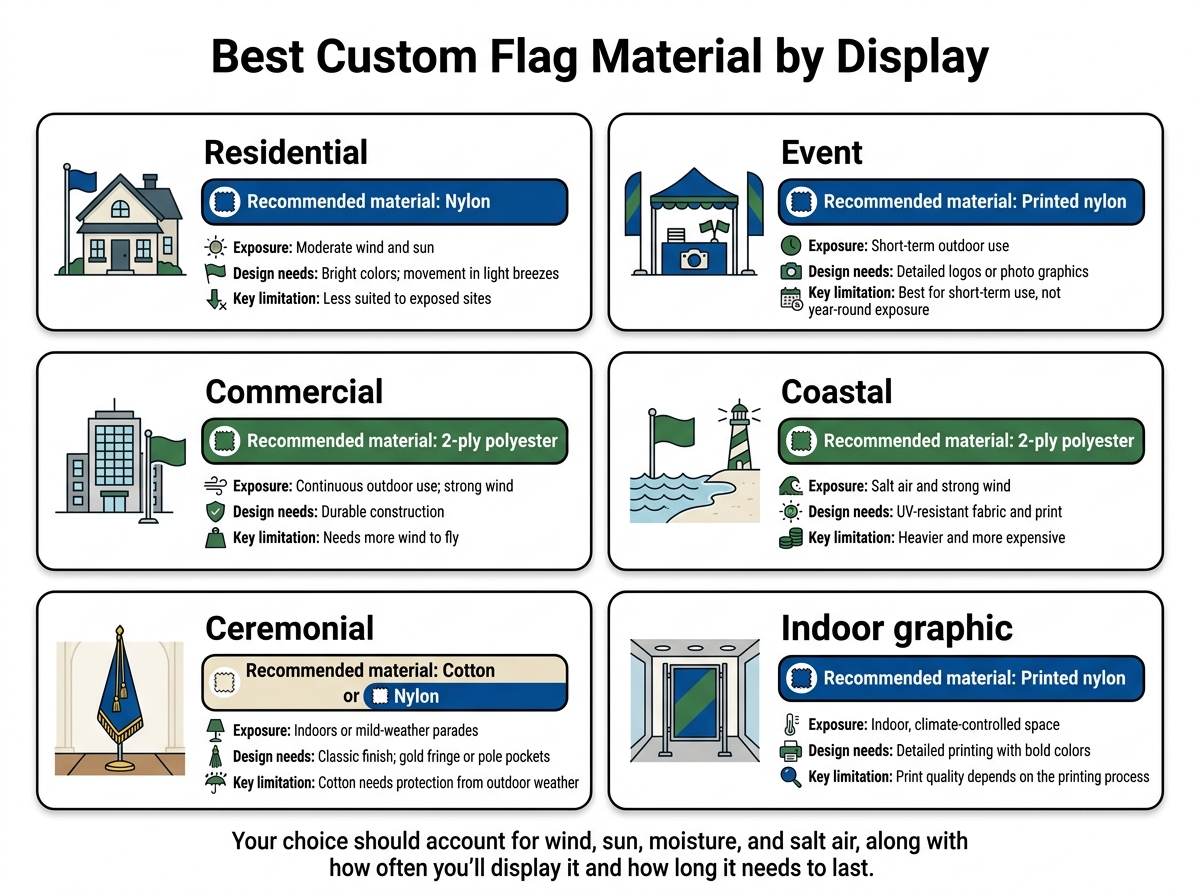
Best Custom Flag Material by Display
Choose fabric based on where you’ll display it and the look you need.
| Display | Exposure | Design needs | Recommended material | Key limitation |
|---|---|---|---|---|
| Residential | Moderate wind and sun | Bright colors; movement in light breezes | Nylon | Less suited to exposed sites |
| Event | Short-term outdoor use | Detailed logos or photo graphics | Printed nylon | Best for short-term use, not year-round exposure |
| Commercial | Continuous outdoor use; strong wind | Durable construction | 2-ply polyester | Needs more wind to fly |
| Coastal | Salt air and strong wind | UV-resistant fabric and print | 2-ply polyester | Heavier and more expensive |
| Ceremonial | Indoors or mild-weather parades | Classic finish; gold fringe or pole pockets | Cotton or nylon | Cotton needs protection from outdoor weather |
| Indoor graphic | Indoor, climate-controlled space | Detailed printing with bold colors | Printed nylon | Print quality depends on the printing process |
Your choice should account for wind, sun, moisture, and salt air, along with how often you’ll display it and how long it needs to last.
FAQs
How long will my custom flag last outdoors?
A flag’s lifespan depends on its material and the local weather. Nylon flags typically last about 90 days with regular outdoor use. More durable polyester flags can last up to 180 days in harsh, windy, or coastal conditions. Cotton offers limited weather resistance, so it’s best for indoor or ceremonial use.
To help your flag last longer, check it regularly, take it down during severe weather, and alternate it with a backup [3].
Does a double-sided design affect my fabric choice?
Yes. Double-sided flags need more material or specific printing techniques to keep the design clear on both sides and prevent show-through. Fabric weight and opacity matter.
Talk with your printer about a fabric that suits your design and holds up well for indoor or outdoor display.
How should I clean and store my flag?
Wash nylon or polyester flags in cold water on your machine’s delicate cycle. For cotton or wool flags, hand wash with mild soap or use a professional dry cleaner. Clean vintage or delicate flags with a vacuum brush attachment covered in cheesecloth. Always air dry.
Once flags are completely dry, store them in acid-free boxes, tubes, or archival bags. Keep them in a cool, dry place - not in a basement or attic [3].
