


Installing a flagpole may seem simple, but even small errors can lead to safety hazards, wasted resources, and costly repairs. Here’s what you need to know to avoid common mistakes:
- Location Matters: Ensure the spot is clear of trees, buildings, and utility lines. Stay at least the flagpole's height plus 10 feet away from overhead wires. Call 811 to mark underground utilities before digging.
- Pick the Right Pole: Match the material (aluminum, fiberglass, or steel) to your area's wind and weather conditions. Choose a height suitable for your property and ensure the flag size aligns with the pole's capacity.
- Strong Foundation: Follow the "10% of pole height + 2 feet" rule for burial depth. Use proper concrete and account for soil type to prevent instability or water damage.
- Handle Carefully: Protect the pole’s finish from scratches or dents during storage and installation to avoid weakening the structure.
- Check Parts and Assembly: Verify all components are present and undamaged. Follow manufacturer instructions closely to ensure the system works as intended.
Proper planning and execution are key to a secure, long-lasting installation. Avoid these pitfalls, and your flagpole will stand tall for years to come.
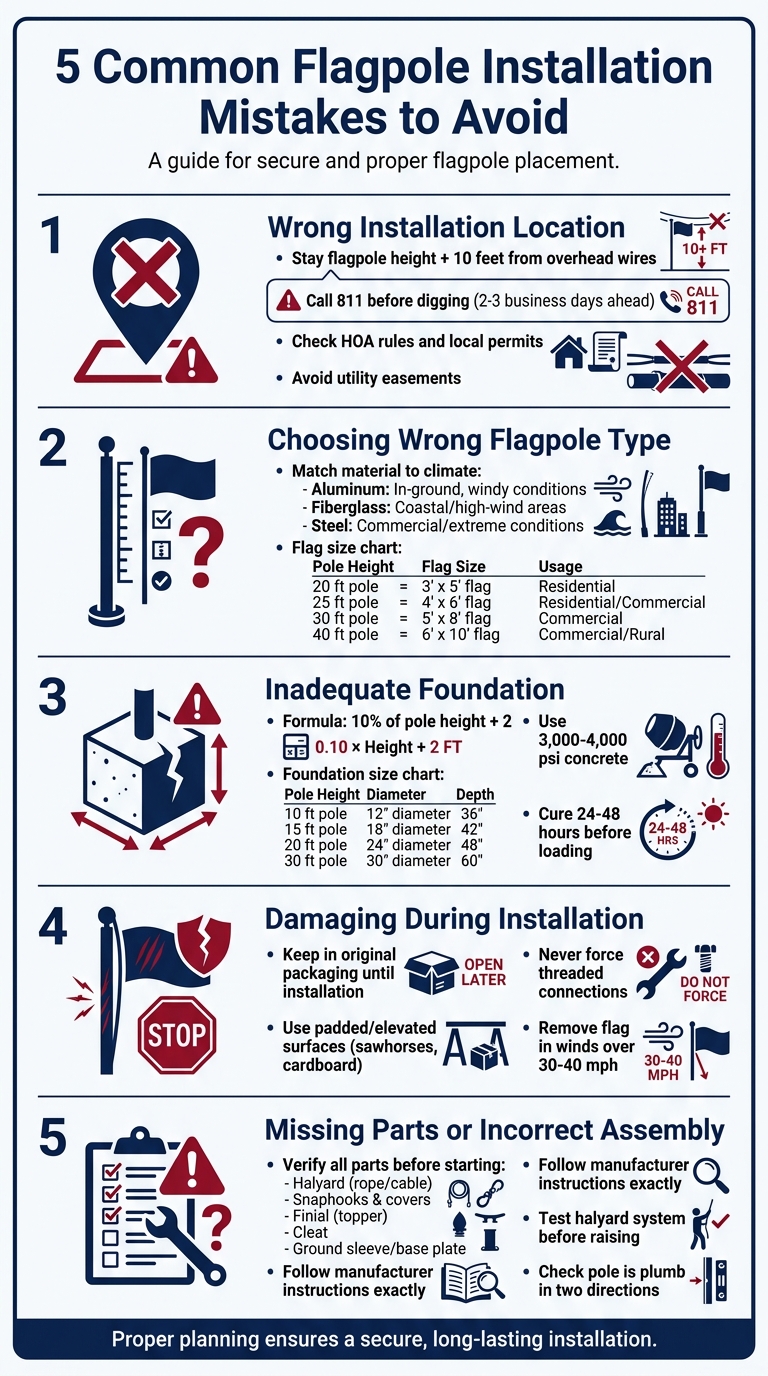
5 Common Flagpole Installation Mistakes to Avoid
Mistake 1: Selecting the Wrong Installation Location
Choosing a bad spot for your flagpole can lead to property damage, violations of rules, or even interference with utilities. Fixing these mistakes later on is not only costly but often a major hassle.
Avoiding Obstructions and Hazards
The first step to a secure flagpole is picking the right location. Make sure the area is free from trees, buildings, and power lines so the flag can move freely and the installation is safe.
Keep in mind that the flagpole should be at least its height plus an extra 10 feet away from overhead wires. For example, if you’re installing a 15–25 foot pole on a residential property, this means staying 25–35 feet away from any wires. This extra distance helps ensure safety, especially during the tricky process of raising the pole.
Once you’ve confirmed the area is clear above ground, don’t forget to check for potential risks below the surface.
Checking for Underground Utilities
Skipping this step can lead to major service disruptions and expensive repairs.
Before you dig, call 811 at least 2–3 business days in advance. This free national service works with local utility companies to mark public lines for power, gas, water, and communications. However, note that 811 only covers public utilities up to your property line or meter. It won’t locate private systems like sprinkler lines, septic systems, invisible fences, or drainage pipes. To avoid surprises, consider hiring a private utility locating service to map out these private lines.
"Never guess about underground infrastructure – one wrong dig could lead to costly repairs and safety hazards." - HD Flagpoles
Mark the intended spot for your flagpole with white spray paint or a stake before the locators arrive. And most importantly, don’t start digging until you’ve confirmed all lines have been marked or cleared.
Once you’re sure the area is safe, the next step is to ensure you’re following all local rules and guidelines.
Following Local Regulations
Local building codes, permits, and HOA rules may limit where you can place your flagpole or how tall it can be. Check with your local building department to confirm any requirements and, if you live in an HOA-governed area, secure written approval from the HOA board before purchasing any equipment. HOA guidelines are often stricter than city regulations, so don’t skip this step.
Additionally, avoid placing your flagpole within utility easements - these are sections of your property reserved for public infrastructure access. Your local building department can clarify whether a footing inspection is required before pouring concrete for the foundation.
sbb-itb-4fbc981
Mistake 2: Choosing the Wrong Flagpole Type
Picking the right flagpole is just as important as setting a strong foundation. A pole that can’t handle local wind conditions might bend, break, or even collapse. To ensure your installation lasts, it’s important to match the pole’s material and specifications to your environment.
Matching Material to Weather Conditions
Wind is the biggest challenge your flagpole will face. A flying flag acts like a sail, creating sudden lateral forces during gusty conditions.
- Aluminum: A great choice for in-ground installations. It’s durable and performs well in windy conditions when installed correctly.
- Fiberglass: Known for its flexibility and resistance to harsh weather, fiberglass is ideal for coastal or high-wind areas. These poles often use PVC ground sleeves, making installation easier.
- Steel: Typically reserved for commercial applications, steel offers maximum strength for larger flags or extreme conditions.
If you live in coastal or open areas, look for a flagpole rated for high-wind conditions under ASCE 7 standards, rather than opting for a standard residential model. For colder climates, make sure the foundation goes below the frost line to avoid "heaving", which can tilt the pole and cause uneven stress.
Considering Height and Strength Requirements
The taller the pole, the more wind stress it has to endure. The table below outlines recommended flag sizes based on pole height:
| Pole Height | Recommended Flag Size | Property Type |
|---|---|---|
| 20 Feet | 3' x 5' | Residential |
| 25 Feet | 4' x 6' | Residential/Commercial |
| 30 Feet | 5' x 8' | Commercial |
| 40 Feet | 6' x 10' | Commercial/Rural |
Using a flag that’s too large for the pole can lead to structural failure. Industry guidelines from the National Association of Architectural Metal Manufacturers (NAAMM) set limits on flag sizes for specific pole heights to prevent overloading. Companies like Action Flag offer a wide range of aluminum, fiberglass, and steel flagpoles for residential, commercial, and display needs.
"The higher you fly and the larger your flag, the more force the system must resist." - Heartland Flags
Getting the material and height right is key before tackling foundation and assembly issues.
Mistake 3: Installing an Inadequate Foundation
One of the most critical errors in flagpole installation is starting with a weak foundation. Just like choosing the right location and flagpole, the foundation is key to ensuring your flagpole stands strong over time. Without a properly sized base, the ground might fail to handle the wind's forces, leading to issues like a wobbly pole, cracked concrete, or, in the worst-case scenario, a toppled flagpole. This could result in property damage or even injuries.
The size of the foundation should match the height of your flagpole to keep it stable. A common rule of thumb is to calculate the required depth as 10% of the flagpole's height, then add 2 feet. For example, a 20-foot pole would need a hole at least 48 inches deep. Here's a quick reference guide for typical recommendations:
| Pole Height (ft) | Recommended Hole Diameter (in) | Minimum Depth (in) |
|---|---|---|
| 10 | 12 | 36 |
| 15 | 18 | 42 |
| 20 | 24 | 48 |
| 30 | 30 | 60 |
Digging the Correct Hole Size
Before starting, call 811 a few business days ahead to check for underground utilities - this step is just as important during foundation work as it is during location selection.
The type of soil you’re working with also influences the hole's size. For sandy or loose soil, increase both the depth and diameter by at least 12 inches to improve stability. In clay-heavy soil, an additional 6 inches of depth and a gravel base for drainage can prevent water from pooling, which could weaken the foundation over time.
Using a cardboard tube form, such as a Sonotube, helps create a clean, cylindrical shape for the concrete while keeping the surrounding soil from collapsing into the hole. A well-prepared hole ensures that the concrete will provide the necessary support to resist lateral forces.
Using the Right Concrete and Installation Methods
For the best results, use concrete rated at 3,000–4,000 psi. Many installers prefer fast-setting concrete because it hardens within 20 to 40 minutes, which minimizes the chance of the ground sleeve shifting during the process.
Let the concrete cure for 24 to 48 hours before placing any load on it. For sleeve installations, center the pole using shims and sand, then seal the top 0.5 inches of the sleeve with all-weather silicone to keep moisture out.
Action Flag offers a variety of flagpoles for residential, commercial, and display purposes, all of which perform best with a properly installed foundation. By taking the time to build a solid base, you’ll protect your flagpole investment and ensure it stands tall and secure for years to come.
Mistake 4: Damaging the Flagpole During Installation
Even with a solid foundation, improper handling during installation can harm your flagpole. Scratches, dents, or bent parts often happen when installers rush or skip important precautions. These aren't just surface issues - they can weaken the flagpole's structure and drastically reduce its lifespan.
The finish on a flagpole serves as a protective barrier against corrosion and weather. If that layer gets damaged, moisture can sneak in, leading to rust or material breakdown. A single deep scratch or dent can turn into a weak spot, making the pole more vulnerable to cracking or bending, especially in strong winds.
Storing and Handling the Flagpole Correctly
Keep your flagpole in its original packaging until installation. The packaging is designed to shield the finish during transport and storage. As soon as the flagpole arrives, inspect all parts for any shipping damage.
Avoid placing pole sections directly on surfaces like concrete, gravel, or dirt. Instead, use sawhorses or a padded, elevated surface. If you need to set the sections down temporarily, lay them on cardboard or a tarp to protect the finish.
Threaded connections and internal components need extra care. Forcing pieces together or cross-threading fittings can cause permanent damage, like stripped threads or bent parts. If something doesn’t fit smoothly, stop and refer to the assembly instructions rather than forcing it.
Proper handling and immediate installation go hand in hand to preserve your flagpole's condition.
Installing Promptly After Delivery
Timely installation is key to avoiding damage from moisture, temperature changes, or physical mishaps. Tempered aluminum flagpoles are sturdy but can still be compromised if left exposed for too long before being installed.
If immediate installation isn’t possible, store the flagpole sections in a dry, clean area on an elevated surface, away from busy spaces. Plan your installation for clear weather to ensure the concrete sets properly and to avoid stressing the pole with strong winds before the foundation stabilizes. As Flags Unlimited advises, "remove the flag during high winds (over 30-40 mph) to prevent damage, as tempered aluminum poles are strong but not indestructible". This is especially critical in the first few days after installation while the concrete is curing and the setup is at its most vulnerable.
Mistake 5: Missing Parts or Incorrect Assembly
Once you've sorted out the location, pole type, foundation, and handling, the next step is making sure every part is accounted for and assembled correctly. Each component plays a vital role in ensuring your flagpole remains stable and functional over time.
A flagpole isn't just a simple pole - it's a system. If even one part is missing, the flagpole might not work as intended. For instance, a broken halyard or missing snaphooks means you won’t be able to raise or lower your flag .
Internal halyard systems require extra attention. If the aircraft cable is missing, future maintenance becomes a major hassle since the entire pole will need to be lowered to access internal components. Spotting these problems before installation can save you a lot of trouble later.
Checking All Parts Before Installation
Start by unboxing everything and checking it against the manufacturer’s parts list. Key components include the halyard (either a rope or stainless steel aircraft cable), snaphooks, snaphook covers, the decorative finial (topper), the cleat, and the ground sleeve or base plate . Don’t forget to inspect inside the pole for any hidden parts.
Examine every piece carefully for signs of damage or corrosion. Look for dents, deep scratches, or any damage to the flagpole sections that could prevent them from fitting together properly. If you’re buying from a big-box store, double-check that the kit includes all the necessary hardware - some "pole-only" kits require you to purchase additional fittings, halyards, or flags separately.
"Carefully inspect product descriptions and specs before purchase. Confirm the pole and any hardware is corrosion resistant, rated for your wind zone, and meets any unique local requirements" - HD Flagpoles
Once you’ve confirmed all parts are present and in good condition, you can move on to assembly.
Following Assembly Instructions
Stick closely to the manufacturer’s assembly guide to ensure your flagpole is stable and wind-resistant . Tighten screws by hand and adjust sliding rings to keep the flag properly tensioned.
Before raising the pole, test the halyard system. Make sure the rope or cable moves smoothly through the truck (pulley) and that the snaphooks are securely attached. Pay special attention to the ground sleeve - if it’s assembled incorrectly, the pole may lean, which could compromise its long-term stability .
"Identifying small issues early ensures a quick and easy fix" - Gates Flag & Banner
Conclusion
Properly installing an in-ground flagpole starts with thoughtful planning, choosing the right materials, and careful execution. Before digging, make sure to call 811 at least 48–72 hours ahead to have underground utilities marked. Select a spot that’s free of obstructions, adheres to local zoning laws and HOA rules, and allows your flag to be displayed prominently and securely.
Choose a pole material suited to your local climate, and follow the "10% plus 2 feet" guideline for foundation depth. Ensure the foundation is appropriately sized and includes proper drainage to maintain stability over time. During the concrete pour, use a level to check that the pole is perfectly plumb in two directions - any tilt will be obvious on a tall structure.
Carefully review all components and follow the manufacturer’s instructions to avoid unnecessary damage during installation. Attention to these details will make the process smoother and ensure a lasting result.
If you’re looking for dependable tools and materials, Action Flag offers a selection of durable flagpoles and accessories designed for professional installations.
FAQs
Do I need a permit to install a flagpole?
Yes, you'll usually need permits for installing a flagpole, particularly if it’s taller than 25 feet. These permits are in place to make sure the installation meets local zoning regulations and safety standards. The process might include submitting site plans or arranging inspections. Be sure to contact your local government to understand the specific requirements for your area.
How do I choose a flagpole rated for my wind zone?
When selecting a flagpole for your area, make sure it’s designed to handle your local wind conditions. In regions with strong winds, opting for a smaller flag can help extend its lifespan. Pay attention to the foundation depth and installation method - stronger winds may require a deeper foundation for added stability. Don’t forget to review local regulations, and it’s a good idea to consult a professional to ensure the flagpole is safe and built to last.
When should I remove the flag during high winds?
To safeguard your flag, flagpole, and the surrounding area, take the flag down during high winds. This becomes crucial when winds go beyond the safe limits for your specific flagpole setup. Strong gusts can lead to considerable damage, so it's always wise to play it safe and remove the flag when severe weather is on the horizon.

