


At military or veteran funerals, the flag presentation is a solemn and meaningful tradition. However, errors in handling or displaying the flag can undermine the respect and dignity of the ceremony. Here's how to avoid the most common mistakes:
- Incorrect Flag Placement: The blue field (union) must always be at the deceased's head and over their left shoulder.
- Placing Items on the Flag: Federal law prohibits placing anything on the flag, including flowers or medals.
- Wrong Flag Size or Material: Use the official 5 x 9.5 ft cotton burial flag for proper folding and presentation.
- Improper Orientation During Transport: The union should remain positioned correctly during all movements.
- Incorrect Folding Technique: The flag must be folded 13 times into a precise triangle, with only the blue field visible.
- Using Damaged or Dirty Flags: Inspect for wear, stains, or tears, and replace or clean flags as needed.
- Improper Storage: Store the folded flag in a protective case, away from sunlight, moisture, and extreme temperatures.
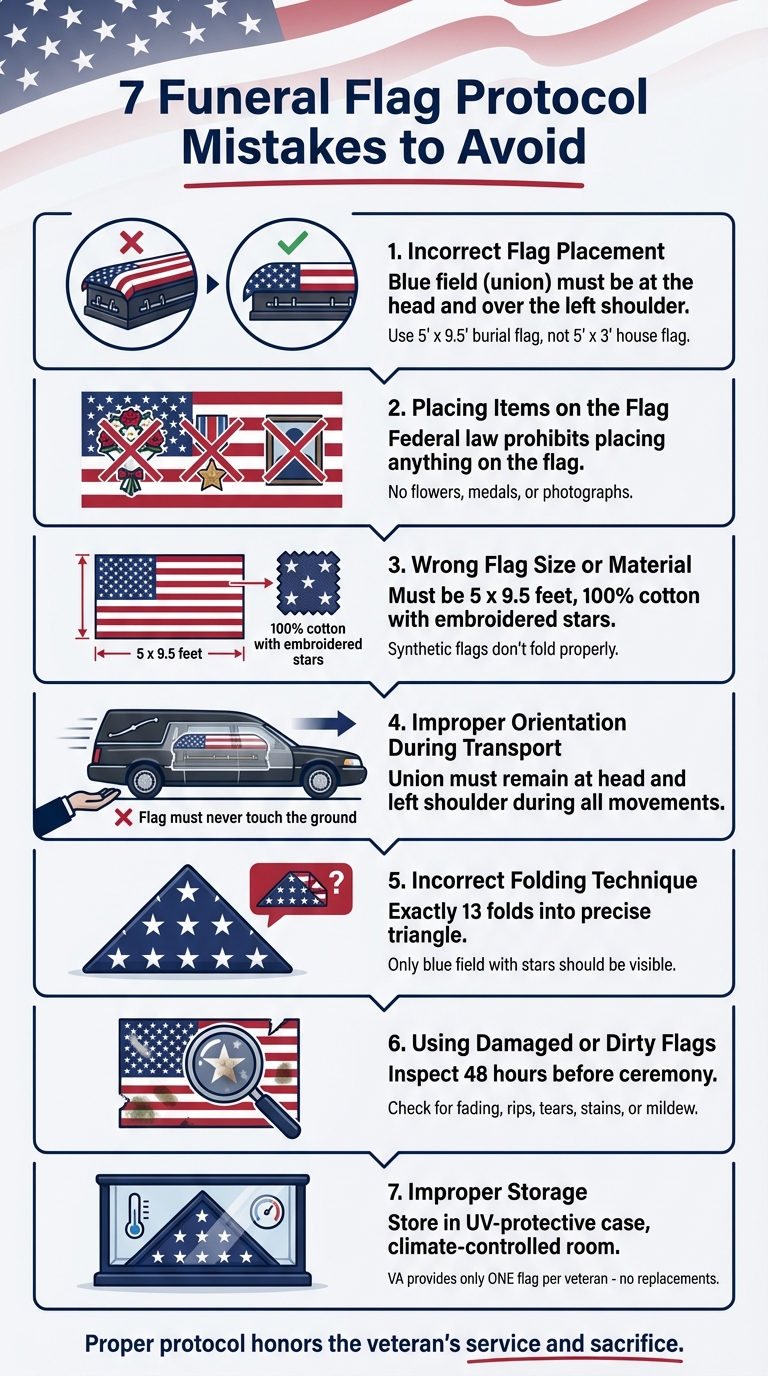
7 Funeral Flag Protocol Mistakes to Avoid - Quick Reference Guide
1. Incorrect Flag Placement on the Casket
One of the most common mistakes when draping a flag over a casket is misplacing the union - the blue field with stars. It should always be positioned at the deceased's head and over their left shoulder. This placement holds deep significance, as it aligns the union closest to the heart, symbolizing honor and respect.
Another frequent error involves using an improperly sized flag. Families sometimes select a 5' x 3' house flag instead of the correct 9.5' x 5' burial flag. Using the wrong size makes proper draping nearly impossible and can interfere with the folding ceremony. The flag's size is particularly important to ensure it fits properly on different casket styles.
The casket design also affects how the flag should be placed. For half-couch caskets, the flag is folded in three layers, with the blue field positioned over the open upper section. For full-couch caskets, the flag is folded into a triangle and placed above the left shoulder.
Care must also be taken to ensure the flag never touches the ground or any surface. It should be held waist-high and fully supported at all times. To maintain uniformity and respect, the Department of Defense implemented standardized flag presentation protocols for all military branches on April 17, 2012.
If the service is held outdoors and the weather is poor, an all-weather flag is recommended. Alternatively, the standard cotton burial flag should be shielded from rain and wind to prevent damage, as cotton deteriorates quickly when wet.
For families seeking a lasting keepsake, Action Flag offers heavy cotton memorial flags that meet military specifications and are designed for durability.
sbb-itb-4fbc981
2. Placing Items on Top of the Draped Flag
When it comes to flag placement, the rules are strict and rooted in respect. The U.S. Flag Code makes it clear: under 4 U.S.C. §8, nothing - be it a mark, insignia, word, design, or object - should ever be placed on or attached to the flag. This isn’t just a matter of tradition; it’s a federal law.
"The flag represents a living country and is itself considered a living thing." – U.S. Code Title 4
This means items like flowers, photographs, religious symbols, or military medals should never rest on the flag. Doing so diminishes its meaning rather than honoring the service member. Instead, personal mementos or floral arrangements should be placed on stands near the casket, ensuring they don’t come into contact with the flag. To maintain this standard, coordinate with the funeral director and honor guard beforehand to ensure the flag remains untouched by other items. This separation is essential to preserving the flag’s dignity throughout the ceremony.
The burial flag is a solemn tribute to a veteran’s service. When the honor guard presents it to the family, they often say, "Please accept this flag as a symbol of our appreciation for your loved one's honorable and faithful service". Following these guidelines ensures the flag remains a dignified symbol of respect, reflecting the honor due to the service member and their sacrifice.
3. Using the Wrong Flag Size or Material
For U.S. burial ceremonies, the flag must measure 5 x 9.5 feet to ensure the proper 13-fold formation. A flag that's too small or made from inappropriate materials can disrupt this process, leading to misaligned folds and an untidy triangular shape. This specific size isn't arbitrary - it’s essential for achieving the neat geometry required for the ceremonial fold. If the flag is undersized, the folds won't align properly, and tucking the end becomes a challenge.
The material matters just as much as the size. Official burial flags are made from 100% cotton with embroidered stars, ensuring they fold neatly and maintain their ceremonial appearance. Flags made from synthetic materials, like nylon, are designed for outdoor use and are unsuitable for casket presentations. As The DrillMaster points out:
"There is a synthetic version of the general purpose (interment) flag and it is only for attaching to a halyard to fly. It's called the all-weather flag. It's not for placing on a casket since it does not fold well and will not stay on the casket without help."
Using the wrong size or material can compromise the ceremony’s integrity and diminish its dignity. When the folding is done correctly, only the blue field with white stars should remain visible. If red or white stripes are exposed, it signals a breach in protocol, disrupting the presentation and detracting from the solemnity of the moment.
For families needing additional flags for multiple services or those wanting to preserve the original, Action Flag provides government-specification burial flags. These flags adhere to the precise 5 x 9.5-foot standard and are crafted from proper cotton, ensuring they fold correctly and uphold the dignity of the ceremony. Currently, only six companies are licensed to produce these large-star interment flags.
4. Improper Flag Orientation During Transport
Once the flag is properly draped, keeping its orientation correct during transport is just as important. From the funeral home to the final resting place, the flag must always remain positioned with the union (the blue field) at the head and over the left shoulder of the deceased.
"The flag is placed on a closed casket so that the union blue field is at the head and over the left shoulder of the deceased." – Veterans Flag Depot
After verifying the flag's placement at the funeral home, the focus shifts to maintaining this alignment during every movement. To avoid mistakes, pallbearers should be informed of the casket's head position. Before loading the casket into a hearse or carrying it to the gravesite, double-check the orientation to ensure it hasn’t shifted.
For cremation services, the protocol involves the folded flag. The lead bearer should carry the flag to the right of the urn during transport. Once at the service site, the flag is unfolded to cover the remains. With the U.S. cremation rate projected at 61.8% in 2024, these specific guidelines for urns are becoming increasingly relevant.
Finally, under no circumstances should the flag touch the ground during transport.
5. Incorrect Flag Folding Technique
The flag folding ceremony turns the ceremonial drape into a meaningful keepsake for the family. This process requires at least two people to ensure accuracy - trying to fold it alone often leads to mistakes. While ceremonial honor guards may use 6–8 members for added precision and tension, two individuals can still perform the fold correctly if they work carefully. The technique must be precise to honor the flag's dignity throughout the ceremony.
The proper fold involves exactly 13 steps, resulting in a tidy triangle. The goal is to completely enclose the red and white stripes within the blue field, leaving only the blue background and white stars visible.
Start by holding the flag taut at waist height. Fold the lower striped section over the blue field. Then, fold it again so the blue field faces outward. From there, begin a series of triangular folds, starting at the striped end, until only the blue field with stars is visible.
"In the folding, the red and white stripes are finally wrapped into the blue, as the light of day vanishes into the darkness of night." – Veterans Flag Depot
Any loose or uneven folds suggest the flag wasn't held tightly enough during the process. The final triangle should display only the blue field and white stars - if any red or white stripes are visible, you'll need to start over. Precision is far more important than speed in this ceremony.
6. Using Damaged or Dirty Flags
The condition of a flag is just as important as its proper placement and folding. A well-maintained flag reflects respect for a veteran's service and sacrifice, while a damaged or dirty flag can detract from the solemnity of the occasion. As Master Sgt. Willis Hosley, Patriot Honor Guard superintendent, puts it, "serviceable flags still have a rich color, without any fading, rips, or tears". If a flag doesn't meet this standard, it should be replaced.
To ensure the flag is in top condition, inspect it at least 48 hours before the ceremony. Look for signs of wear like fraying, loose threads, popped seams, stains, fading, or mildew. Make sure the header and grommets are secure, as worn hardware could fail during the service.
If the flag is dirty but otherwise in good shape, cleaning might be an option. Nylon and polyester flags can be gently machine washed in cold water with mild detergent, then air-dried flat. Cotton ceremonial flags require hand washing in cool water with delicate soap. Avoid bleach and hot dryers, as they can weaken the fibers and cause the colors to bleed. Always handle flags with clean, dry hands to prevent transferring oils or dirt.
For minor damage, simple repairs like trimming frayed edges or re-stitching seams can extend the flag’s lifespan. However, heavily faded or torn flags should be replaced. Since the Department of Veterans Affairs provides only one burial flag per veteran, proper care is essential. Flags that are beyond repair should be retired respectfully, often through ceremonial burning conducted by groups like the American Legion or VFW.
If you need a replacement flag that meets ceremonial standards, companies like Action Flag offer high-quality options.
FlagStars: "A serviceable flag honors the decedent and avoids distraction during solemn moments."
7. Improper Storage After Presentation
After the flag is presented to the family, the ceremony concludes, but the responsibility of preserving it begins. Since the Department of Veterans Affairs provides only one burial flag per veteran, it’s irreplaceable if lost, damaged, or stolen. This makes proper storage essential to protect this meaningful keepsake.
One common mistake families make is leaving the folded flag exposed to conditions that can cause damage. Cotton burial flags are especially vulnerable to moisture, UV rays, dust, and oils, which can lead to fading, mildew, or deterioration. The VA specifically cautions:
"The burial flag is not suitable for outside display because of its size and fabric, and it can be damaged by weather"
To protect the flag, consider using a triangular memorial flag case with UV-protective glass. Place it away from direct sunlight and store it in a climate-controlled room. Avoid areas like attics, basements, or garages, where fluctuating temperatures and humidity can harm the flag.
If refolding the flag is necessary to fit it into a display case, rest assured it’s perfectly acceptable. Richard Blodgett of Military Flag Display Case explains:
"There is no disrespect involved in refolding a Memorial Flag"
When refolding, ensure the flag is tight, with only the blue field and stars visible. This helps it fit securely in the display case while maintaining its dignity.
For added preservation, companies like Action Flag offer memorial flag cases specifically designed to protect burial flags. Shadow boxes are another option, allowing families to display additional mementos, such as medals, photographs, or shell casings from a 21-gun salute, alongside the flag. These thoughtful storage solutions help ensure the flag remains a cherished symbol for generations.
Conclusion
Proper funeral flag protocols go beyond mere formalities - they represent a nation's gratitude for the sacrifices made by service members. When families and honor guards follow these traditions, they uphold the solemnity and dignity that veterans have earned through their service. Ceremonies like the 13 folds, symbolizing the original American colonies, provide families with a sense of comfort during a deeply challenging time.
To ensure a respectful presentation, flags must meet the 5 x 9.5-ft standard required for the 13-fold ceremonial tradition. Using durable, heavyweight cotton ensures the flag drapes properly and folds cleanly. Since the Department of Veterans Affairs typically provides only one burial flag per veteran and does not offer replacements if it is lost or damaged, starting with a high-quality flag is crucial. This attention to detail ensures the flag remains a lasting tribute to the veteran’s service.
Preserving the burial flag is equally important. High-quality display cases, like those offered by Action Flag, are designed specifically for burial flags. Shadow boxes are also available, allowing families to display medals, photographs, and other keepsakes alongside the flag.
By avoiding the common protocol mistakes mentioned earlier, families and honor guards can ensure the ceremony reflects the respect and gratitude the service deserves. Ultimately, the burial flag ceremony becomes a powerful symbol of national appreciation. As Memorials.com explains:
"The military burial flag ceremony represents the respect shown to both the living family and the deceased. The ceremony commemorates the sacrifice made by the family and the departed veteran for their country".
FAQs
Who is eligible for a VA burial flag?
A VA burial flag is provided to honor veterans who meet specific service criteria. This includes those who served during wartime, passed away while on active duty after May 27, 1941, or were honorably discharged before June 27, 1950. Additionally, certain reservists and individuals discharged due to a disability may qualify, regardless of their branch of service or status.
What should we do if it rains during an outdoor service?
If rain is in the forecast, make sure your flag is an all-weather type, crafted from durable materials like polyester or nylon. These flags are built to withstand the elements and can stay displayed without worry. However, if your flag isn’t all-weather, it’s best to bring it indoors or swap it out to protect it from damage and maintain proper flag etiquette.
Can medals be displayed with a folded flag without breaking protocol?
Yes, it’s perfectly acceptable to display medals alongside a folded flag. Just make sure the medals are treated with care and arranged thoughtfully to uphold the flag's symbolism. Avoid any placement or handling that could come across as disrespectful.

