


Flags are symbols of pride and history, but improper storage can lead to fading, mold, or damage. To preserve your flag’s condition, you need to focus on inspection, cleaning, folding, and choosing the right storage materials and location. Here’s a quick summary:
- Inspect for damage: Check for frayed edges, loose threads, fading, stains, or rusted hardware.
- Clean thoroughly: Hand-wash with mild detergent, rinse well, and air-dry completely before storing.
- Fold correctly: Use the triangular fold for American flags or roll around an acid-free tube for delicate materials.
- Use proper materials: Opt for acid-free boxes, tissue paper, or breathable cotton bags to protect the fabric.
- Store in the right environment: Keep flags in cool, dry, and dark spaces, away from moisture, pests, and sunlight.
Proper care ensures your flag remains in great condition for years to come.
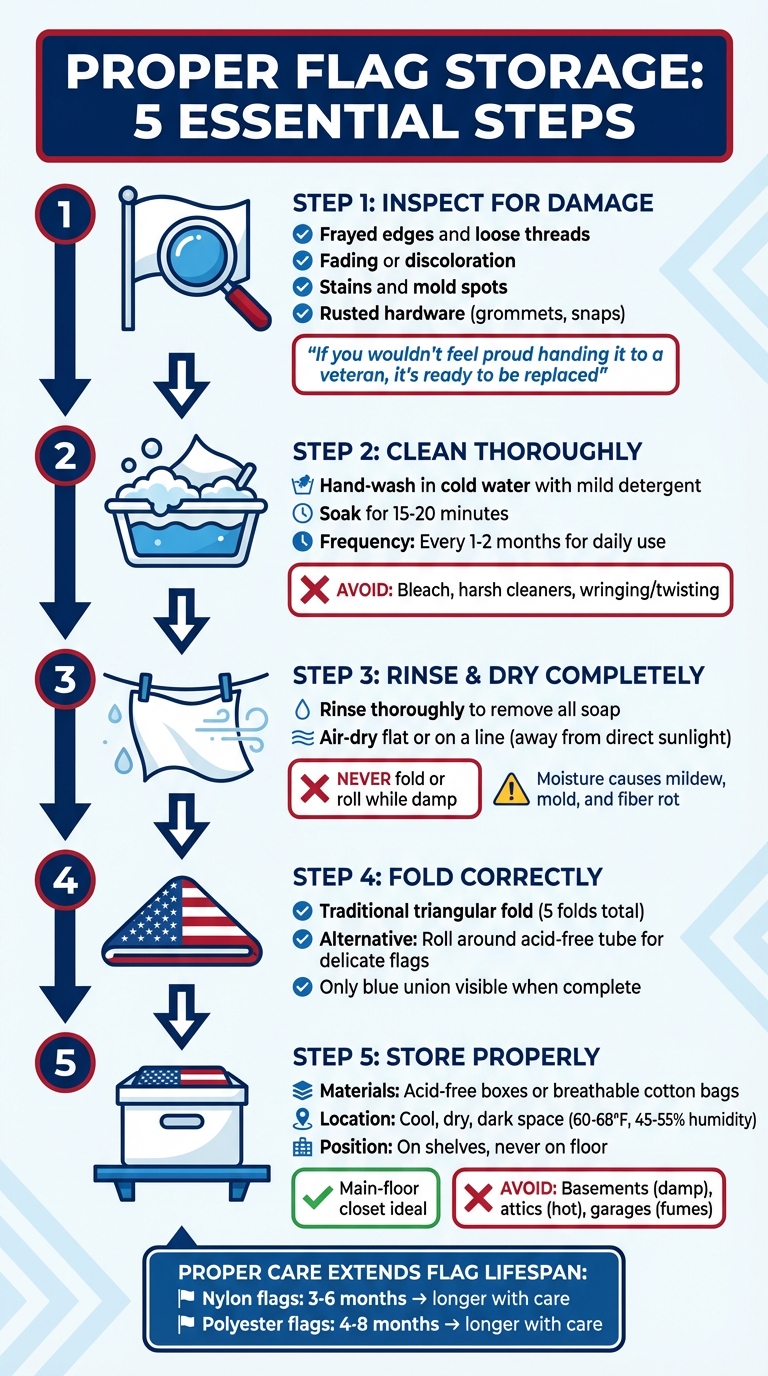
5-Step Flag Storage Process: Inspect, Clean, Fold, Store Properly
Inspect Your Flag Before Storage
Before putting your flag away, give it a thorough once-over. Even small issues like frayed edges or loose stitching can get worse during storage. As Atlantic Flagpole points out, "small frays, loose threads, or minor seam issues can worsen if compressed in a box".
Check for Physical Damage
Begin by examining the fly end, the outermost edge of the flag that’s farthest from the pole. This part usually takes the most wear and tear, so look for signs like light fraying or shredding. Run your fingers along the seams and around the canton to feel for any loose threads or stitching.
Don’t forget the canvas header and hardware. Make sure grommets, snaps, or rings are secure and free from rust. Keep an eye out for small tears, strained fabric, or any other damage. Tidmore Flags offers a helpful rule of thumb:
"If you would not feel proud handing the flag to a veteran, it is ready to be replaced".
Look for Color Fading and Stains
Check that the flag’s colors remain bold and vibrant, especially the fly end, which is often exposed to sunlight and harsh elements. Look for fading, yellowing on white sections, or discoloration caused by pollutants or cleaning residues. Be on the lookout for dark spots, fuzzy patches, or a musty odor - these may signal mold or mildew. Dirt, salt spray (common in coastal areas), pollen, or soot can also accumulate, and dye transfer (where darker colors bleed into lighter ones) might indicate the flag was stored while damp.
Alan J. Duro from Accent Banner emphasizes:
"The sun can be particularly damaging to the colors of any flag that is kept outdoors".
Once the inspection is complete, clean your flag to help prevent any further deterioration.
sbb-itb-4fbc981
Clean Your Flag Before Storage
Once you've inspected your flag for damage, it's important to clean it thoroughly before putting it away. Dirt, salt spray, pollen, and other residues can weaken the fabric over time, leading to discoloration or damage during storage. Jordan Fischer, E-commerce Specialist at Tidmore Flags, emphasizes the importance of cleaning, saying the goal is to "remove dust, salt, pollen, and light soil without stressing stitches or dyes". For flags flown daily, a wash every 1 to 2 months - or after exposure to storms, smoke, or heavy pollen - helps extend their lifespan. Proper cleaning ensures your flag is ready for safe folding and storage.
Hand-Wash With Care
Most flags can be hand-washed in cold water with a mild detergent. Before you begin, test for colorfastness by rubbing a damp cotton swab on a hidden section of each color. If any dye transfers, avoid washing and consider professional dry cleaning instead. Hand-washing is gentler on fabric fibers, which is especially important for materials like cotton and wool that are fragile and prone to color bleeding. For flags with mud stains, start by rinsing them with cool water, then add a small amount of detergent. Let the flag soak for 15–20 minutes to loosen dirt, and use a soft brush if needed - scrubbing can damage the fibers. Avoid using bleach, optical brighteners, or harsh cleaners, as these can weaken the fabric and cause colors to fade or yellow.
Rinse and Dry Properly
After washing, it's crucial to rinse and dry your flag correctly to prevent damage. Rinse thoroughly to remove all soap, as leftover detergent can trap dirt or weaken the fabric over time. Never wring or twist the flag; instead, lay it flat on a clean towel and roll it up to remove excess moisture. To air-dry, place the flag flat on a clean surface or hang it on a line, keeping it away from direct sunlight and heat sources. Tidmore Flags advises, "Never fold or roll a damp flag, as moisture trapped in folds can cause mildew and mold, odors, and fiber rot". Avoid using dryers, as high heat can shrink headers, weaken stitching, and even melt synthetic materials like nylon. Make sure the flag is completely dry before folding it for storage, paying extra attention to thicker areas like the header and seams, which take longer to dry.
Fold Your Flag Correctly
Once your flag is dry, folding it properly is key to protecting its fabric and preparing it for display. The traditional triangular fold is the go-to method for American flags and is also widely used for state, military, and international flags. This method carries a deep sense of tradition and respect. When folded correctly, only the blue union (the star field) will be visible, with no red or white stripes showing.
Folding works best with two people to keep the flag taut and off the ground. If you're folding it alone, use a clean, flat surface like a table to ensure proper handling. Valerie Albarda from Lowe's emphasizes:
"The folding of the American flag is a way to show reverence and respect for this nation".
Once you're ready, follow the precise steps below to keep your flag in excellent condition.
Step-by-Step Folding Instructions
Here’s how to fold your flag properly:
- Step 1: Hold the flag waist-high, keeping it parallel to the ground and taut.
- Step 2: Fold the lower striped section lengthwise over the blue union, then fold it again lengthwise so the blue union remains on the outside.
- Step 3: Starting at the striped end, bring the bottom corner up to form a triangle.
- Step 4: Fold the outer point of the triangle inward, aligning it parallel to the top edge, and repeat this process along the entire length toward the union.
- Step 5: Tuck any remaining material into the final fold to secure the triangle shape.
For long-term storage, consider laying the flag flat or rolling it around an acid-free tube. This helps avoid deep creases that could weaken the fibers over time. This method is especially useful for delicate materials like cotton or ceremonial flags with fringe, as it helps prevent damage.
Select the Right Storage Materials
Once your flag is properly folded, the next step is finding storage materials that will help preserve its condition. The goal is to protect it from moisture, chemicals, and pests while keeping it clean and dry. Choosing the right materials can make all the difference in maintaining the flag's integrity over time.
Use Breathable or Acid-Free Materials
For everyday flags, breathable storage options work best. A 100% cotton bag or unbleached cotton cloth allows airflow while keeping dust at bay. This setup also prevents moisture buildup, which could lead to mold issues. Jeff Ley, Sales Manager at STORExpress Self Storage, advises:
"For most textiles and fabrics, including the American flag, we recommend ventilated and dry environments that do not fluctuate in temperature".
If you're storing a ceremonial or historical flag, an acid-free archival box is the better choice. Regular cardboard contains acids that can yellow fabric and attract pests such as silverfish. Archival boxes, on the other hand, are designed for long-term preservation. To further protect your flag, place acid-free tissue paper between folds to minimize friction and prevent color transfer. For especially delicate flags, consider rolling them onto an acid-free tube and storing them in an archival storage tube. This method avoids the sharp creases that can weaken fibers over time.
Consider Airtight Containers
If you live in a humid area or a place prone to pests, sealed plastic tubs offer extra protection. However, it's crucial to make sure the flag is completely dry before sealing it inside. Even slight dampness can lead to mold, mildew, and fiber rot in an airtight container. To add an extra layer of care, line the tub with acid-free tissue or clean cotton to avoid direct contact with materials that may trap moisture. For those in particularly humid climates, placing silica gel packets or desiccants inside the container can help control moisture levels and maintain a stable environment.
Choose the Right Storage Location
Once your flag is cleaned and properly folded, the next step is finding the right place to store it. The storage environment plays a crucial role in protecting the flag from fading, mold, and fiber damage. It's not just about the container you use - it’s also about where you keep it.
Store in a Cool, Dry, and Dark Space
Temperature and humidity control are essential for preserving your flag. Ideally, the storage area should stay between 60–68°F with a relative humidity of 45–55%. Exposure to UV light can cause colors to fade and weaken the fabric over time.
A main-floor closet often works best. As Tidmore Flags explains:
"Basements can be damp and attics can overheat. A main-floor closet with stable temperature and humidity is usually best".
Steer clear of garages, where dust, fumes, and extreme temperature changes can cause harm. If you’re considering a storage unit, make sure it’s climate-controlled. Storage Rentals of America emphasizes:
"excessive humidity promotes mold and mildew growth. Instead, store the flag in a climate-controlled storage unit for the best results".
In addition to maintaining the right climate, consider how the flag is physically positioned.
Keep Off the Floor
Always store your flag on shelves or racks, not directly on the floor. This precaution protects it from potential damage caused by flooding, spills, or pests.
Grace Wilson from Storables highlights this point:
"Place the storage containers or flag cases on shelves or racks to keep them off the floor. This helps to prevent any potential damage from flooding, pests, or accidental spills".
Using a shelf also reduces the risk of water damage and pest infestations. Make it a habit to check your stored flags every six months for signs of moisture, unusual odors, or pest activity.
Conclusion
This checklist has walked you through the essential steps for flag care, from inspection to storage. While proper flag storage is straightforward, it requires attention to detail. By focusing on checking for damage, thorough cleaning, correct folding or rolling, using acid-free materials, and selecting a stable storage environment, you can significantly extend your flag's lifespan and keep it looking its best.
As Tidmore Flags explains:
"Careful handling, cleaning, and storage can add months or even years to a flag's usable life before it needs to be retired".
For example, a nylon flag flown daily in moderate wind conditions typically lasts 3 to 6 months, while a polyester flag endures 4 to 8 months. Proper care routines and rotating your flags can extend these lifespans even further.
Beyond the practical advantages, taking care of your flag also honors what it represents. Action Flag highlights this connection:
"A well-maintained flag reflects the pride and respect you have for the symbol... [and] reduces the need for frequent replacements".
Regular inspections for issues like moisture, pests, or discoloration are key to preventing costly damage. With consistent care, your flag will remain a dignified and lasting symbol for display.
FAQs
How do I know if my flag is too damaged to store?
Inspect your flag carefully for any signs of fraying, tears, or extensive wear. If the damage is too severe to fix or the fabric is badly worn out, it’s time to retire the flag. Regular checks help ensure you store flags in good shape, which helps them last longer.
What’s the safest way to remove stains without fading colors?
To clean stains from flags while keeping their colors intact, stick to gentle detergents and mild cleaning techniques. Steer clear of harsh chemicals or bleach, as these can harm the fabric. Hand wash the flag in cold water using a color-safe detergent, and if necessary, treat stains with a mild stain remover. Always test any cleaning solution on a small, inconspicuous section first. Once cleaned, let the flag air dry in a shaded spot to avoid sun damage or color fading.
Is it better to fold or roll a flag for long-term storage?
When it comes to long-term storage, rolling a flag is often the preferred method over folding. Rolling minimizes creases, which can weaken the fabric over time - this is especially important for flags that are valuable or have historical significance. Folding, on the other hand, can create permanent creases that put stress on the fibers. By rolling the flag around an archival-quality tube, you help preserve its condition and extend its lifespan.

