


Memorial flag cases are an important way to preserve and display flags given to honor military veterans, first responders, or other dignitaries. Choosing the right case ensures your flag is protected and presented with respect. Here's a quick guide to help you make the best choice:
- Flag Size: Measure your folded flag to match it with the correct case. Standard burial flags (5' x 9.5') and commemorative flags (3' x 5') require different case sizes.
- Material: Solid hardwoods like oak, walnut, and cherry offer durability and elegance. Pine is a more affordable option but less long-lasting.
- Finish: Options include natural, stained, or polished finishes. Ensure the finish is cured to avoid damage to the flag.
- Front Panel: Glass offers clarity and scratch resistance, while acrylic is lighter and more impact-resistant.
- Display Style: Wall-mounted, tabletop, or shadow box cases provide different ways to honor and showcase your flag.
- Personalization: Add engraved nameplates, etched glass designs, or brass medallions for a personal touch.
Choosing a case with quality craftsmanship, proper UV protection, and a velvet lining will help preserve your flag for generations. Prices start at $131.96 for basic designs and can go up to $420.37 for premium options with custom features.
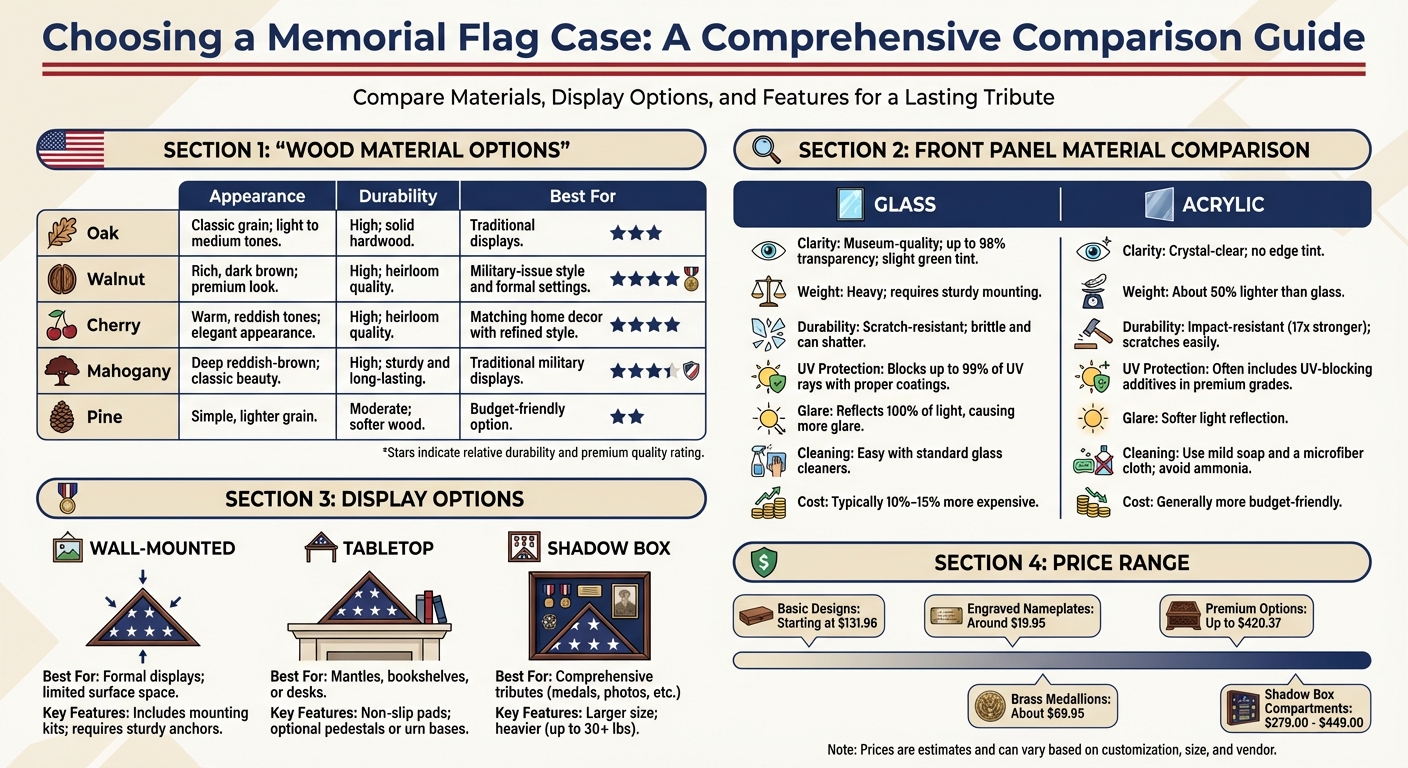
Memorial Flag Case Material Comparison Guide: Wood Types, Glass vs Acrylic
Step 1: Determine the Correct Flag Size
Picking the right case for your flag is crucial. A case that's too small can crush the flag or prevent it from closing properly, while an oversized case can lead to shifting and wrinkles.
Measure Your Flag
Start by identifying the type of flag you have. Is it a burial or casket flag (larger in size) or a presentation/Capitol flag (smaller)? For folded flags, measure the base's longest edge and the height from the base to the peak.
A standard burial flag, typically 5' x 9.5', folds down to a base length of about 21–25 inches and a height of 11–13 inches. Use these standard guidelines to ensure accuracy, but keep in mind that folding techniques can slightly alter the dimensions - up to about an inch. Most folded flags are approximately 3 inches thick, so make sure the case depth can comfortably accommodate this without compressing the fabric. Accurate measurements are key to maintaining the flag's shape and presenting it with dignity.
Once you've measured your flag, compare the dimensions to the specifications of the case you're considering.
Check Product Specifications
With your flag's dimensions in hand, carefully review the product details to ensure compatibility. Pay close attention to labels that specify the flag type the case is designed for.
For example, a government-issued burial flag will not fit in a case meant for a 3x5 flag. Similarly, placing a smaller flag in a burial flag case can leave too much empty space, creating an unbalanced and unattractive display.
If your flag's size is slightly outside standard measurements or if it's folded more loosely, reach out to the vendor to confirm the case can accommodate the extra bulk. Taking this step can save you the hassle of dealing with a case that doesn't fit properly.
sbb-itb-4fbc981
Step 2: Select the Material and Finish
Once you've confirmed the size of your flag case, it's time to focus on materials that combine durability with style. The right material ensures your flag is displayed with dignity while protecting it for years to come.
Compare Wood Types
The material you choose plays a big role in both the appearance and longevity of the case. Solid hardwoods are often preferred for their strength and timeless look, making them ideal for heirloom-quality displays. Popular choices include oak, walnut, cherry, mahogany, and maple - each offering a balance of durability and elegance.
Pine, on the other hand, is a softer wood and a more affordable option. While it works for budget-friendly cases, it’s not as long-lasting as hardwoods, which are better suited for permanent memorials.
Wood Types Comparison:
| Wood Type | Appearance | Durability | Best For |
|---|---|---|---|
| Oak | Classic grain; light to medium tones | High; solid hardwood | Traditional displays |
| Walnut | Rich, dark brown; premium look | High; heirloom quality | Military-issue style and formal settings |
| Cherry | Warm, reddish tones; elegant appearance | High; heirloom quality | Matching home decor with refined style |
| Mahogany | Deep reddish-brown; classic beauty | High; sturdy and long-lasting | Traditional military displays |
| Pine | Simple, lighter grain | Moderate; softer wood | Budget-friendly option |
Pro Tip: High-tannin woods like oak, walnut, and mahogany can produce tannic acid when exposed to moisture, which might harm the flag. To prevent this, seal the interior and allow the finish to cure for four to six weeks before use.
After selecting your wood, the next step is choosing a finish to enhance both the look and protection of your case.
Consider Finishes
The finish you choose significantly affects the case's appearance and how well it safeguards your flag. Common finishes include natural, stained, and polished (or sealed) options.
- Natural finishes emphasize the wood’s organic grain, making them a great choice for lighter woods like maple.
- Stained finishes, such as Vintage Oak or Heirloom Cherry, add deeper colors for a more formal or coordinated look.
- Polished or sealed finishes not only enhance the wood’s appearance but also protect against moisture, which helps prevent tannin transfer to the flag.
For added protection, high-quality cases often feature a soft velvet lining, which shields the flag from scratches and wear.
When selecting a finish, think about where the case will be displayed. An oak case with a vintage finish might complement a rustic or traditional setting, while walnut or cherry finishes are better suited for formal spaces like offices or living rooms. Whatever you choose, ensure the finish is fully cured before placing the flag inside - this prevents off-gassing or chemical reactions that could damage the fabric.
Step 3: Choose Between Glass or Acrylic Front
When selecting the front panel for your display case, the choice between glass and acrylic depends on your priorities for clarity, durability, and maintenance. Both materials have distinct advantages that cater to different needs.
Glass vs. Acrylic
Glass offers a timeless, museum-quality look with exceptional clarity - up to 98% transparency. It resists scratches well and is easy to clean with standard glass cleaners. However, it reflects 100% of light, which can create noticeable glare under direct lighting. Glass is also heavier and more fragile, breaking into sharp shards if dropped or impacted.
Acrylic, on the other hand, provides a modern, crystal-clear finish without the green tint often seen in glass. It’s about 50% lighter than glass, making it a safer and more practical choice for wall-mounted displays. Acrylic is also significantly stronger - up to 17 times more impact-resistant than glass - but it’s more prone to scratches. Even something as simple as wiping it with a paper towel can leave marks. Fortunately, scratches on acrylic can often be repaired using specialized plastic polishes, unlike glass, which cannot be restored once damaged.
For UV protection, both materials help prevent fading, but the level of shielding depends on the product. Museum-grade glass coatings can block up to 99% of harmful UV rays, while premium acrylic often includes UV-blocking additives. Regardless of your choice, avoid placing the display case in direct sunlight to minimize exposure.
If you value a classic, low-maintenance, and scratch-resistant option, glass is the way to go. For a lightweight, impact-resistant choice that’s ideal for wall-mounted displays, acrylic is a better fit.
| Feature | Glass Front | Acrylic Front |
|---|---|---|
| Clarity | Museum-quality; up to 98% transparency; slight green tint | Crystal-clear; no edge tint |
| Weight | Heavy; requires sturdy mounting | About 50% lighter than glass |
| Durability | Scratch-resistant; brittle and can shatter | Impact-resistant (17x stronger); scratches easily |
| UV Protection | Blocks up to 99% of UV rays with proper coatings | Often includes UV-blocking additives in premium grades |
| Glare | Reflects 100% of light, causing more glare | Softer light reflection |
| Cleaning | Easy with standard glass cleaners | Use mild soap and a microfiber cloth; avoid ammonia |
| Cost | Typically 10%–15% more expensive | Generally more budget-friendly |
Once you’ve decided on the front material, you’re ready to explore mounting and display options in the next step.
Step 4: Review Mounting and Display Options
Choose a display option that complements your flag's size and case material while ensuring both prominence and safety.
Assess Display Styles
Wall-mounted cases are a great way to save surface space while placing the flag at eye level. These are perfect for living rooms, offices, or memorial walls. Most standard cases come with wall-mounting kits, but it’s important to check if your wall anchors can support the weight - especially for shadow boxes filled with medals and patches.
Tabletop cases offer more flexibility since they can be placed on mantles, desks, or bookshelves and moved around as needed. They often come with non-slip pads to protect surfaces and keep the case stable. Some tabletop cases include matching pedestals to enhance their display. There are even specialized cremation pedestals available, which double as an urn to hold ashes beneath the flag case.
Shadow box cases are larger and designed to hold not just the folded flag but also medals, patches, pins, certificates, or photos. These are ideal for creating a detailed tribute that tells a complete story of service. However, shadow boxes are heavier and require more wall space compared to standard triangular cases.
| Display Style | Best For | Key Features |
|---|---|---|
| Wall-Mounted | Formal displays; limited surface space | Includes mounting kits; requires sturdy anchors |
| Tabletop | Mantles, bookshelves, or desks | Non-slip pads; optional pedestals or urn bases |
| Shadow Box | Comprehensive tributes (medals, photos, etc.) | Larger size; heavier (up to 30+ lbs) |
Once you’ve chosen a display style, make sure the mounting hardware can support your selection.
Check Mounting Hardware
Sturdy mounting hardware is critical to keeping your display secure. For wall-mounted cases, especially shadow boxes that can weigh over 30 pounds, confirm that the included hardware is suitable for your wall type. Heavy-duty drywall anchors are a must if you’re displaying a shadow box filled with memorabilia.
For added convenience, consider cases with a removable back panel. This feature makes it easy to update the display by adding more medals or items over time without needing to unmount the case. To maintain the integrity of the flag, avoid placing the display in direct sunlight, which can cause fading.
Step 5: Consider Personalization and Craftsmanship
A memorial flag case becomes much more than a display when it reflects the story of the individual it honors. Adding thoughtful touches and ensuring quality craftsmanship can turn it into a heartfelt, lasting tribute.
Personalization Options
Personalizing a memorial case allows you to honor the unique details of a loved one's service. Engraved nameplates are a traditional yet timeless choice. These metal plates typically hold three lines of text, with up to 38 characters per line - perfect for including a name, rank, and years of service. They’re also budget-friendly, costing around $19.95, and come with adhesive backing for easy placement.
For a modern twist, laser-etched glass can engrave military branch seals or custom dedication messages directly onto the glass front. This option keeps the flag clearly visible while adding a personalized touch. Keep in mind that custom engraving generally takes 2–3 weeks to complete.
If you’re looking for something more striking, brass medallions offer a three-dimensional element. These emblems, representing specific service branches, attach to the case exterior and cost about $69.95. For those who want to include additional memorabilia - like medals, patches, or photos - cases with shadow box compartments are available. These cases, priced between $279.00 and $449.00, include Velcro-friendly backings for easy arrangement.
"The craftsmanship is impeccable, and the engraved nameplate honoring my father brings tears every time I see it. A perfect tribute to his service." - John M., Customer
It’s essential to double-check all spelling and dates before placing an order for personalized elements, as making corrections later can be challenging.
American-Made Quality
Choosing American-made craftsmanship ensures your tribute will endure for years to come. The highest-quality cases are crafted from solid hardwoods like cherry, oak, walnut, or maple - not veneers or synthetic materials - and are built by skilled regional artisans.
Look for the "Made in USA" label and FMAA (Flag Manufacturers Association of America) certification when selecting a case. Companies like Action Flag offer FMAA-certified flag cases that blend traditional woodworking techniques with modern personalization options.
These cases often feature UV-protected glass and soft velvet interiors to prevent fading and damage. A multi-step finishing process enhances the durability and beauty of the solid hardwood, making it a cherished heirloom. For instance, standard oak memorial cases start at approximately $204.38, while premium cherry cases with etched seals are priced around $420.37.
"We believe only the best American craftsmanship should honor our veterans for their service to our great country." - American Made for American Heroes
Conclusion
Selecting the right memorial flag case involves a few important considerations: ensuring the case fits your flag's dimensions, choosing durable hardwood like oak, cherry, or maple, deciding between glass or acrylic based on where it will be displayed, reviewing mounting options for wall or tabletop use, and adding a personal touch with engraved nameplates or laser-etched seals. Thoughtful selection not only preserves the flag but also honors its significance for generations to come.
Every year, approximately 600,000 flags are presented to the families of American military veterans. The United States uniquely provides the nation’s flag to the family of every deceased military veteran, making the preservation of this symbol deeply meaningful.
A well-crafted case protects your flag from wear and tear while displaying it with dignity. Features like solid hardwood construction, UV-resistant glass, and velvet lining ensure the fabric and colors remain intact over time.
Action Flag offers a range of American-made memorial flag cases, starting at $131.96 for maple hardwood options. For those seeking premium designs, cherry cases with laser-etched seals are available for around $420.37. All cases include velvet linings and removable back panels for easy flag placement, with free shipping on orders over $75.
Browse the full collection of memorial flag cases at Action Flag to find a lasting tribute that reflects your loved one’s service and legacy.
FAQs
How do I know my folded flag will fit the case?
To make sure your folded flag fits properly in its display case, measure the triangle's base width on the folded flag and compare it to the interior dimensions of the case. Most cases are designed to hold standard flag sizes, such as 3'×5' or 5'×9.5'. A slight difference of around 1 inch is generally fine, ensuring the flag sits snugly without being overly tight or loose.
Which is better for a flag case: glass or acrylic?
When it comes to memorial flag cases, acrylic and glass each have their own advantages. Acrylic stands out for being lightweight, easier to handle, and more resistant to impacts, making it a safer and more practical choice for many. On the other hand, glass offers a polished, museum-quality look, superior scratch resistance, and better UV protection, which helps prevent the flag from fading over time.
If durability and convenience are your priorities, acrylic is a solid option. But if you're aiming for a more elegant display and long-term preservation, glass might be the better fit.
How can I protect the flag from fading over time?
To keep your memorial flag in excellent condition, consider storing it in acid-free bags or archival roll bags. These materials help protect the flag from light and moisture, which can cause damage over time. For even more protection, opt for airtight storage solutions like Mylar bags, which also block UV light. Taking these steps ensures the flag stays safe from environmental harm, preserving its color and fabric for years to come.

