


When installing a flagpole, the right concrete mix ensures stability and longevity. Here's what you need to know:
- For residential poles (15-25 ft): Use standard Portland cement with 3,000 psi strength. It cures in 24-72 hours and works well in stable soil.
- For taller or commercial poles (25-30 ft): Opt for high-strength concrete (4,000+ psi) to handle wind loads and heavy materials.
- For quick projects: Fast-setting concrete cures in 20-40 minutes and reaches 4,000 psi in 28 days, making it ideal for time-sensitive installations.
- For areas with poor drainage or frost: Combine pre-mixed concrete with a gravel base for added stability and water management.
Always include a 4-6 inch gravel layer for drainage, ensure the hole is deeper than the frost line, and allow adequate curing time for long-lasting results.
1. Standard Portland Cement Mix
Standard Portland cement mix provides a 3,000 psi compressive strength, which is strong enough to handle wind loads and keep the pole stable, even during storms. This strength prevents leaning or loosening over time.
Strength
With a 3,000 psi rating, this mix is ideal for anchoring poles up to 25 feet tall. For a 20-foot pole, you'll typically need 6–8 bags of 80-pound premix concrete. The concrete serves as a sturdy anchor for the ground sleeve, ensuring the pole stays upright, even in harsh weather.
Set Time
Standard Portland cement usually cures within 24–72 hours, depending on the amount used - generally about 24 hours per yard of concrete. If you're planning an installation, allow for a multi-day process to ensure proper curing.
Best Use Cases
This mix is a solid choice for flagpoles between 15 and 25 feet in height, especially in areas with stable soil. It's a cost-effective option if you're not in a rush and can wait for the full curing period.
Drainage Compatibility
Standard concrete is naturally impermeable, sealing the ground sleeve when poured directly into the hole. Before pouring, add 4–6 inches of compacted crushed stone, such as #57 stone, at the bottom. Press the ground sleeve into this gravel base. This method ensures a stable foundation for most standard installations and prepares the ground for comparison with other mix types.
sbb-itb-4fbc981
2. High-Strength Concrete Mix
High-strength concrete takes durability to the next level, making it ideal for flagpole installations that demand more robust foundations.
This type of concrete offers 4,000 psi or higher compressive strength, making it a reliable choice when standard mixes fall short. Its added strength is particularly valuable in extreme environments where flagpole foundations face increased stress.
Strength
With a compressive strength of 4,000 psi or more, high-strength concrete is built to handle the intense wind loads that taller flagpoles endure. For instance, a 25–30-foot flagpole in a high-wind region like Oklahoma requires a foundation that’s about 3 feet wide and 4 feet deep, weighing nearly 2,000 lbs. If you’re using heavy steel pipes - such as a 20-foot section weighing approximately 76.86 lbs - the extra strength of this mix helps prevent cracking or shifting under pressure. Once poured, allow the mix to cure fully to ensure it can support these loads effectively.
Set Time
High-strength concrete usually cures within 24–48 hours, providing a solid base for flagpole installation. Liberty Flagpoles emphasizes the importance of waiting for the concrete to harden completely:
By waiting for the cement to completely harden, you establish a firm foundation that holds your flagpole steady so that your flag can fly high.
Proper placement around the ground sleeve is essential during this process.
Best Use Cases
This mix is perfect for flagpoles between 25–30 feet tall, especially in areas with strong winds or for installations using heavy, non-aluminum pipes. Commercial and industrial projects often specify 4,000 psi or higher to meet stricter engineering standards. Coastal regions or areas prone to extreme weather also benefit from the added durability this mix provides.
Drainage Compatibility
Even with its superior strength, high-strength concrete still requires proper drainage to perform well. Use 4–6 inches of gravel for drainage, increasing the layer to 8 inches in clay-heavy soils. Ensure the ground sleeve is inserted deep enough to keep the drainage hole clear, and slope the top of the concrete away from the sleeve to direct water runoff and minimize corrosion risks. For added stability in high-stress installations, incorporating a rebar spiral into the footing can provide extra reinforcement.
3. Fast-Setting Concrete Mix (e.g., Quikrete Fast-Setting)
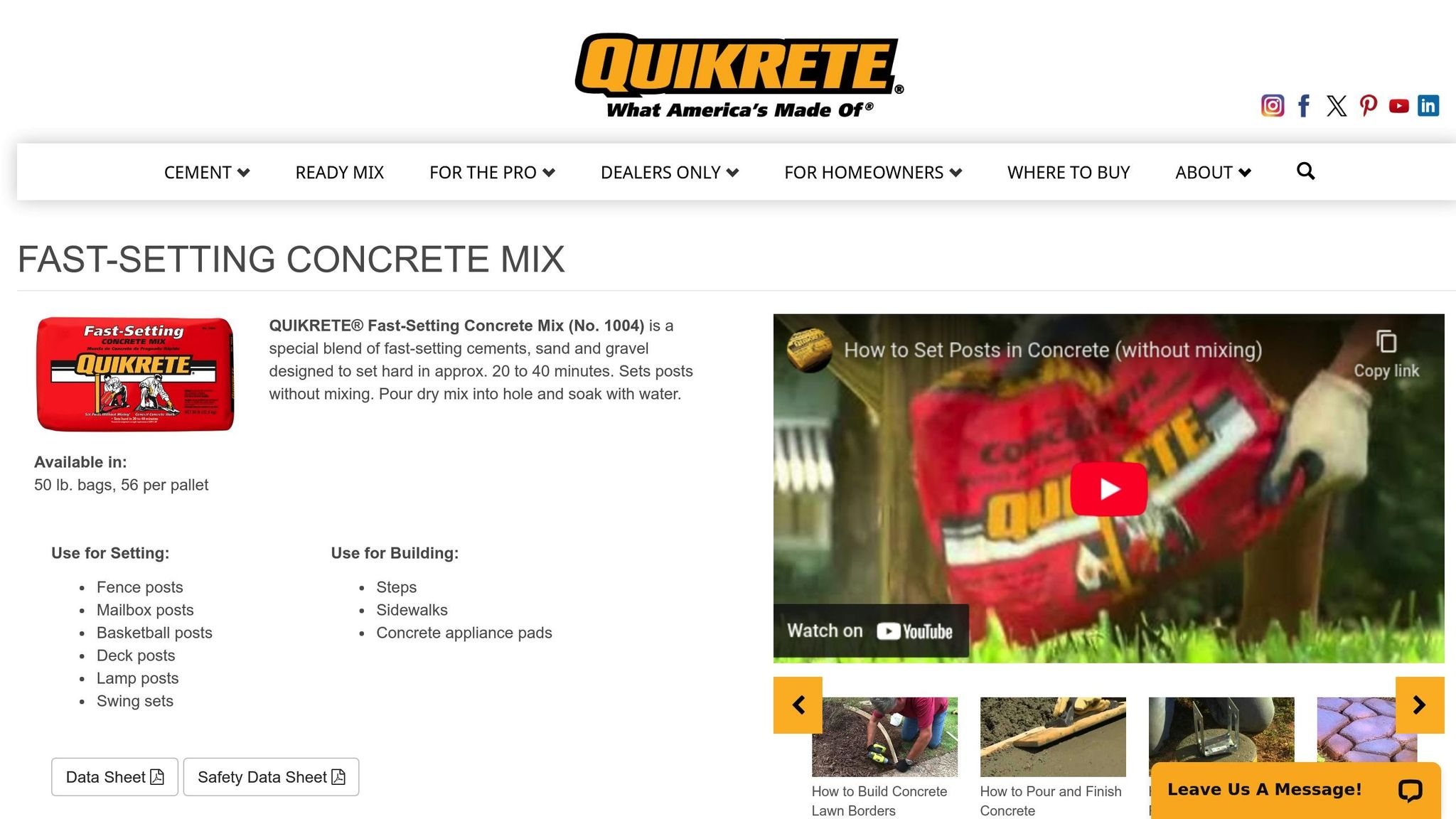
Fast-setting concrete is a game-changer when you’re short on time. Unlike standard or high-strength mixes that can take days to cure, this type of concrete hardens in just 20 to 40 minutes. If you’re installing a flagpole and want the project done in an afternoon, fast-setting concrete is your go-to option. It offers both speed and durability, compared to the 24–48 hours needed for standard concrete to set.
Strength
Fast-setting concrete doesn’t just work quickly - it’s also impressively strong. After 28–30 days, it reaches a compressive strength of 4,000 psi. As Danny Lipford, Founder of Today’s Homeowner, explains:
Fast-setting concrete isn't just simple and fast, it's also durable and strong, reaching 4000 psi - or pounds of force per square inch - after a month. That's stronger than the concrete used for foundations on most homes.
Another big advantage? Its load-bearing capacity. A flagpole set with this mix can handle heavy loads in just 4 hours, while standard concrete usually requires 5–7 days to reach the same level of performance.
Set Time
Speed is the standout feature here. With a set time of only 20–40 minutes, you’ll only need to brace your flagpole for 3 to 5 minutes during the initial set. After 4 hours, the pole is ready to bear its full load. The process is simple, too: pour the dry mix directly into the hole and saturate it with water - no mixing required. For best results, experts suggest pre-wetting the hole to ensure even hydration.
Best Use Cases
Fast-setting concrete is perfect for smaller, residential projects where time is critical. It’s commonly used for flagpoles, mailbox posts, and lamp posts. While it costs about $1.00 more per bag than standard concrete, it’s worth it for single-post installations. For larger projects, though, standard concrete may be the more cost-effective choice.
Drainage Compatibility
To get the most out of fast-setting concrete, proper drainage is key. Start by adding 4 to 6 inches of gravel at the bottom of the hole. Make sure the hole is at least 6 inches deeper than your local frost line to prevent frost heaving. For added protection, slope the top of the concrete away from the flagpole to allow water to run off. Avoid backfilling with dirt, as trapped moisture can cause corrosion and weaken the installation over time.
4. Pre-Mixed Concrete with Gravel Base
When it comes to permanent residential flagpole installations, pairing pre-mixed concrete with a gravel base is a top-tier choice. This two-layer system combines the durability of concrete with the drainage efficiency of crushed stone. Start by laying a 4–6 inch base of compacted 3/4-inch (#57) crushed stone in the hole, followed by pouring concrete around a ground sleeve on top. This approach not only enhances stability but also improves drainage, making it a reliable method for long-term flagpole installations.
Strength
This method takes advantage of the combined properties of concrete and crushed stone. Concrete provides a solid anchor for the flagpole, handling wind loads and vertical forces, while the compacted stone base ensures even weight distribution and prevents shifting. For residential flagpoles, standard pre-mixed concrete typically has a strength of 3,000 psi. Most installations require 6 to 8 bags of 80 lb. concrete. The angular edges of crushed stone interlock when compacted, forming a stable base that outperforms rounded pea gravel.
Set Time
Concrete curing for this method generally takes 24–48 hours. However, some manufacturers suggest waiting up to 72 hours to reach full strength.
Best Use Cases
This technique excels in permanent installations for flagpoles taller than 12 feet, especially in areas prone to high winds or freeze-thaw cycles. For example, a 20-foot flagpole typically requires a 2-foot deep, 9-inch diameter hole with about 95 lbs of stone. A 25-foot pole would need a 2.5-foot deep, 10-inch diameter hole with 150 lbs of stone. Drew Whitmore from Americana Flag Poles emphasizes:
Setting the flagpole too shallow risks instability, leaning, and even collapse over time.
Drainage Compatibility
Beyond its structural benefits, the gravel base plays a crucial role in managing drainage. It reduces frost heave and prevents corrosion by channeling water away from the pole. In colder climates, the stone acts as a barrier against freezing water that could lift the concrete foundation. It also prevents water from pooling around the pole or sleeve, reducing the risk of rust and other damage. For soils with poor drainage, like heavy clay, increasing the stone layer to 8 inches can improve water flow. Always compact the stone in 2-inch layers using a hand tamper, and make sure the concrete surface slopes away from the ground sleeve to direct rainwater away from the pole.
Advantages and Disadvantages
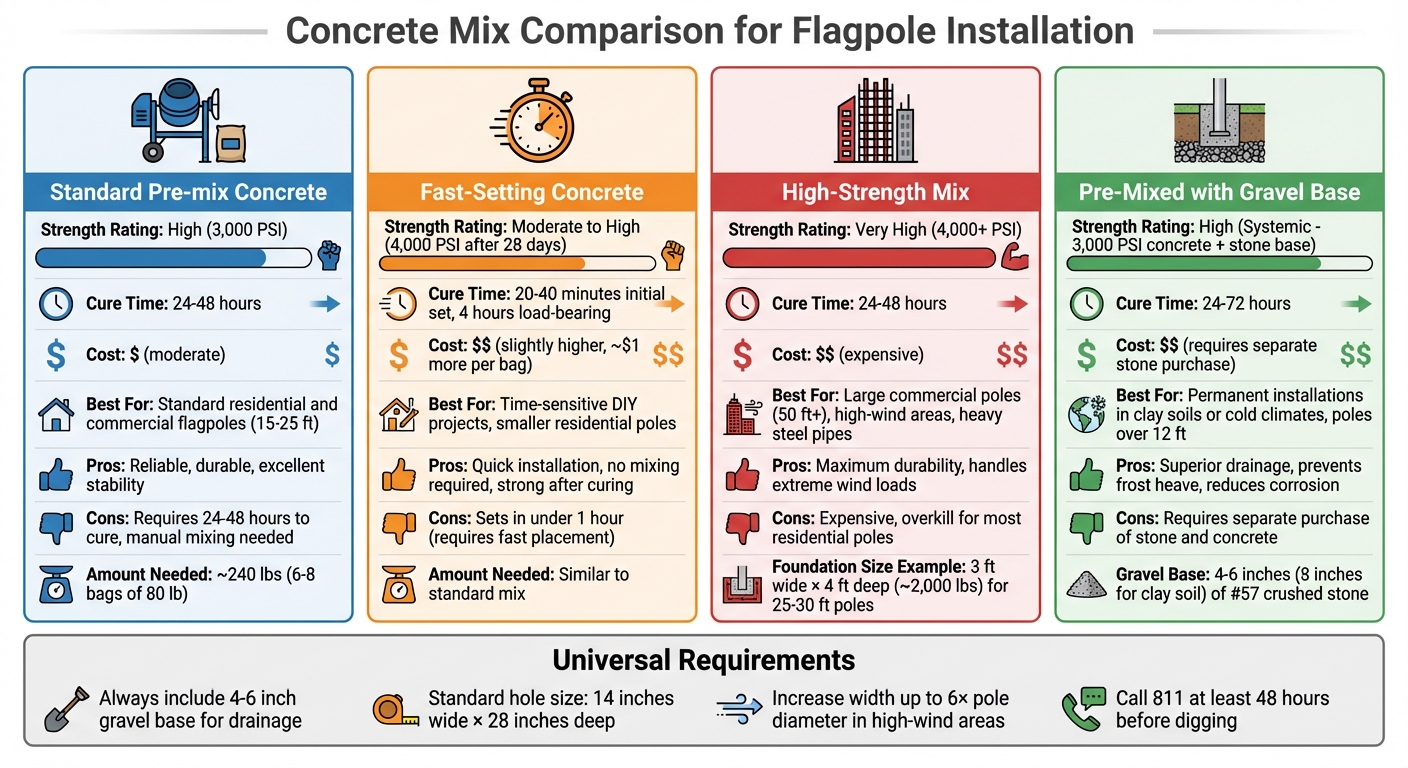
Concrete Mix Comparison Guide for Flagpole Installation
When it comes to selecting the right concrete mix, it's all about balancing factors like strength, cure time, cost, and the specific requirements of your project. Here’s a breakdown of what you need to know about the most common options for flagpole installations.
The standard Portland cement mix is a go-to choice for its reliability. It provides excellent stability and durability, making it ideal for keeping your flagpole upright and secure against strong winds. For most residential setups, you'll need about 240 lbs of this mix, and it requires 24–48 hours to cure properly.
If you're short on time, fast-setting concrete is the way to go. It hardens in under an hour, but you’ll need to work quickly during placement. While it reaches full strength in about 24 hours, this mix is perfect for quick DIY projects where speed matters most.
For heavy-duty needs, high-strength mixes are the champions. They boast compressive strengths of over 3,000 psi, making them ideal for large commercial flagpoles taller than 50 feet or installations in areas prone to high winds. That said, this option is often more than what’s needed for standard residential poles - and it comes with a higher price tag. As Liberty Flagpoles advises:
Let the cement cure for at least 24 to 48 hours before attempting to erect the flagpole. Doing so will prevent you from compromising the integrity of the cement.
The chart below compares these mixes to help you choose the best one for your project:
| Mix Type | Strength Rating | Limitations | Recommended Applications |
|---|---|---|---|
| Standard Pre-mix Concrete | High | Requires 24–48 hours to cure; involves manual mixing | Standard residential and commercial flagpoles |
| Fast-Setting Concrete | Moderate to High | Sets in under 1 hour; requires quick placement | Time-sensitive DIY projects; smaller residential poles |
| High-Strength Mix | Very High | Expensive; overkill for most residential poles | Large commercial poles (50 ft+) or installations in windy areas |
| Pre-Mixed w/ Gravel Base | High (Systemic) | Requires separate purchase of stone and concrete | Permanent installations in clay soils or cold climates |
For any mix, always include a 4- to 6-inch gravel base. As a general rule, foundation holes for flagpoles should be about 14 inches wide and 28 inches deep. In areas with strong winds, you may need to increase the hole width to up to six times the flagpole's diameter.
Conclusion
When selecting the proper concrete mix for your flagpole, consider three main factors: the height of the pole, the soil's drainage properties, and how quickly the installation needs to be completed. The mix you choose should meet both the specific requirements of your project and the surrounding conditions to ensure long-lasting stability.
Here’s a quick recap of key installation details:
- For residential flagpoles between 15 and 30 feet tall, plan to use 6–8 bags of 80 lb. premixed concrete with a minimum strength of 3,000 psi. If time is a concern, fast-setting concrete is a great alternative, as it cures much faster than standard options.
- Always place 4 to 6 inches of #57 crushed stone (3/4-inch angular stone) at the bottom of the hole. For clay or poorly draining soil, increase the stone layer to 8 inches.
- For commercial flagpoles or those over 25 feet, opt for high-strength concrete to handle the increased wind loads effectively.
And don’t forget - before digging, call 811 at least 48 hours in advance to locate underground utilities.
With proper planning, the right materials, and adequate curing time, your flagpole will remain secure for years to come. If you’re looking for durable flagpoles and accessories, check out the range available at actionflag.com - they offer options designed to complement a well-prepared concrete foundation.
FAQs
How do I choose 3,000 psi vs 4,000 psi concrete for my flagpole?
For residential flagpoles in stable soil and areas with moderate wind, 3,000 psi concrete is a solid choice. If you're dealing with larger flagpoles or locations exposed to strong winds, go with 4,000 psi concrete for added strength and reliability. Always take into account local soil conditions and wind patterns, and if you're unsure, consult a foundation engineer to ensure the flagpole remains secure.
How deep should the hole be below the frost line?
To ensure the flagpole remains stable and secure, the hole should be at least 10% of the flagpole's height plus an additional 2 feet deep. This depth not only provides stability but also helps prevent issues like frost heave. Be sure to consider your area's frost line conditions and adjust the depth accordingly to avoid potential shifting or instability over time.
Do I need rebar in a flagpole concrete footing?
Rebar is often suggested for concrete flagpole footings to boost their strength and durability, particularly for taller poles. Since requirements can differ based on factors like pole height and soil conditions, it's a good idea to consult a structural engineer to ensure the reinforcement is suitable for your specific installation.

